

SDG 7 – Affordable and Clean Energy
Rooftop Solar Power Generation Plant
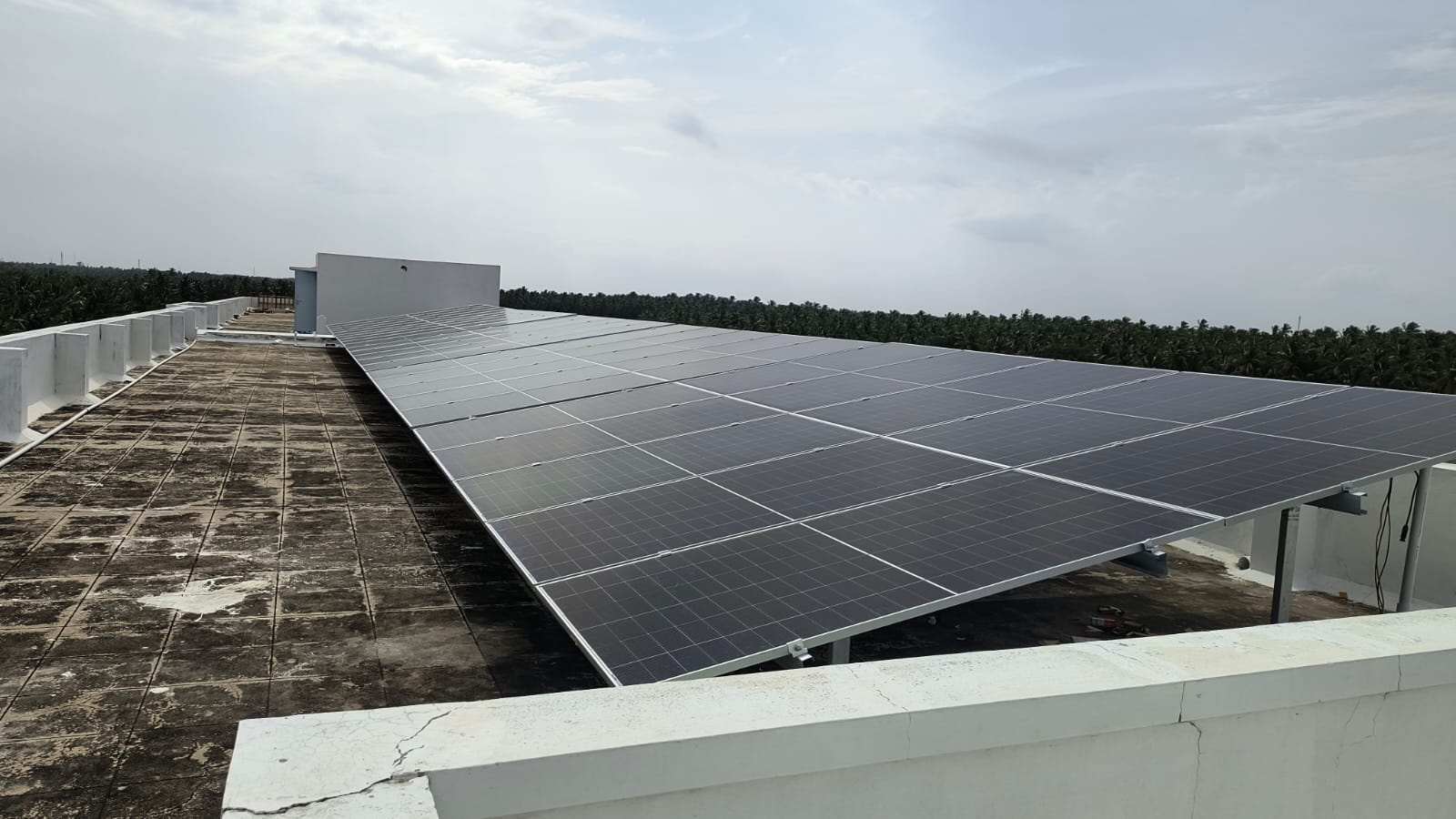
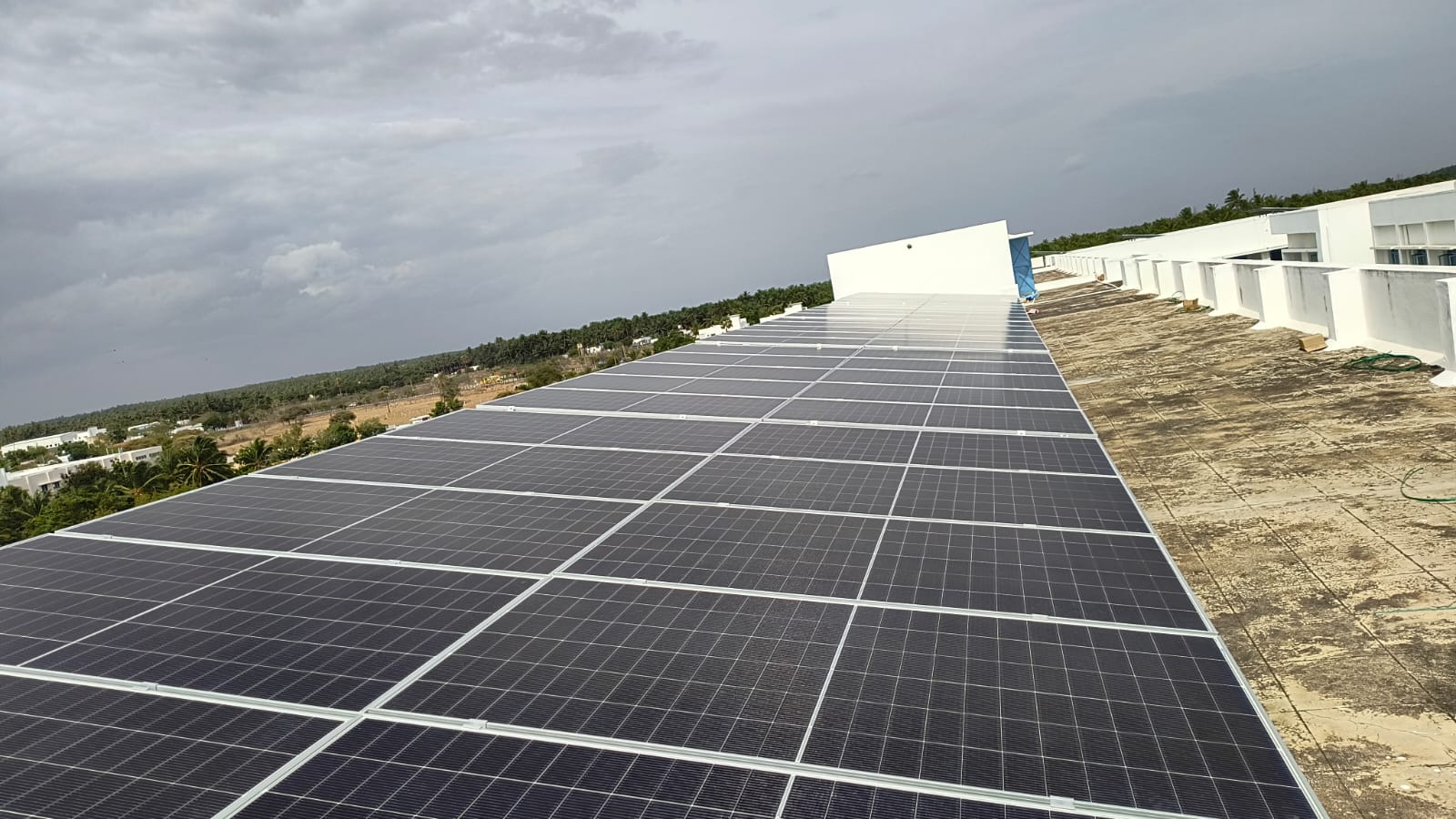
Jai Shriram Engineering College is committed to promoting Sustainable Development Goal 7 (SDG 7): Affordable and Clean Energy, which aims to ensure access to affordable, reliable, sustainable, and modern energy for all. As part of the institution's commitment towards renewable energy and environmental sustainability, the college has installed an 80 kW DC & AC rooftop solar power generation plant on the campus.
The rooftop solar power plant utilizes the available roof space of the college buildings to generate clean and renewable electricity from solar energy. The installation demonstrates the institution's efforts to reduce dependence on conventional energy sources and promote the adoption of environmentally responsible technologies within the educational campus.
Contribution Towards SDG 7
The rooftop solar power plant directly supports the objectives of SDG 7 – Affordable and Clean Energy by increasing the use of renewable energy within the campus. Solar energy is a clean, abundant, and sustainable source of power that helps reduce dependence on fossil-fuel-based electricity.
The initiative contributes to:
- Promoting renewable energy: Increased utilization of solar energy as an alternative to conventional energy sources.
- Reducing dependence on grid electricity: Solar-generated electricity meets part of the institution's daily energy demand.
- Supporting clean energy transition: The project demonstrates practical adoption of renewable-energy technology in an educational institution.
- Improving energy sustainability: Rooftop solar generation provides a sustainable source of electricity over the operational life of the system.
- Creating environmental awareness: The installation serves as a visible demonstration of clean-energy practices for students, faculty, and visitors.
- Promoting sustainable campus development: Renewable energy forms an important component of the college's efforts to develop an environmentally responsible campus.
Environmental Benefits
The use of solar energy helps reduce the environmental impacts associated with conventional electricity generation. By generating electricity from sunlight, the college can reduce its reliance on electricity produced from fossil fuels and contribute to the reduction of associated greenhouse-gas emissions.
The solar installation also makes productive use of existing rooftop areas without requiring additional land for a conventional solar farm. This makes rooftop solar particularly suitable for educational institutions and other urban or semi-urban facilities.
Educational and Student Learning Benefits
The solar power plant provides a practical learning environment for students, particularly those studying Engineering, Electrical and Electronics Engineering, Civil Engineering, Mechanical Engineering, and other technology-related disciplines.
Students can gain practical exposure to:
- Solar photovoltaic power generation
- Renewable energy systems
- Solar panel installation and orientation
- Electrical energy generation and distribution
- Energy monitoring and management
- Sustainable building and campus practices
- Environmental benefits of renewable energy
The facility can also support student projects, technical studies, demonstrations, workshops, and awareness programs related to renewable energy and sustainable development.
Rooftop Solar Plant
Biogas Plant
The college has installed the biogas plant to promote clean energy generation and sustainable resource utilization. The biogas facility consists of a 6-metre biogas plant with an inlet and outlet system and two biogas stoves. The plant is designed as a campus-level renewable-energy facility that can support the conversion of biodegradable organic material into useful biogas for energy applications.
The initiative promotes the principle of "Waste to Energy", where biodegradable resources can be converted into useful energy. By integrating renewable-energy technologies into campus infrastructure, the college aims to create greater awareness of clean energy, encourage responsible resource utilization, and contribute to a sustainable future.