Artificial Intelligence and Data Science
About the Department
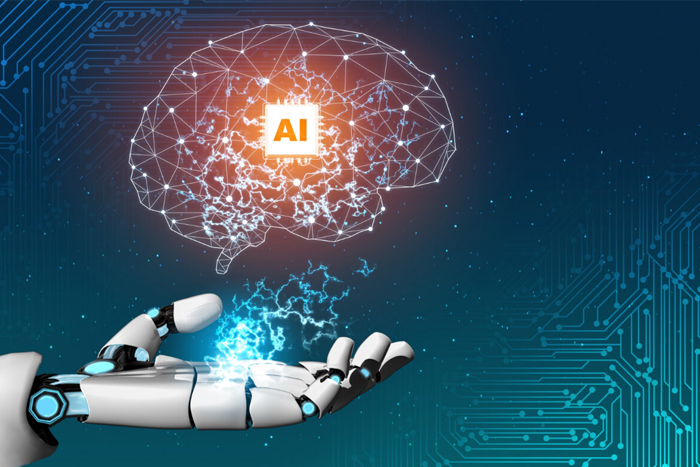

Artificial Intelligence (AI) and Data Science (DS) is a new, exponentially growing field which is concerned with the development of systems that exhibit behavior typically associated with human cognition, such as perceiving, learning, communicating, reasoning and making decisions and set of tools & techniques used to extract useful information from data.
The Department of Artificial Intelligence and Data Science(AI&DS) is introduced in the year 2021 with an intake of 60 students. B.Tech (AI&DS) course is specially designed to enable students to build intelligent machines, software or applications with a cutting-edge combination of machine learning, analytics and visualization technologies.
The department has well established laboratories with good computing facilities, software tools and applications to provide practical exposure to students. Laboratories are networked with seamless internet connectivity with the speed of 100 Mbps.
Vision
- To impart quality education and create center of excellence in the field of AI & DS to produce industry ready engineers.
Mission
- Developing professionals with sound understandings in AI.
- Enhancing employability and entrepreneurial skills in young minds and create leaders to serve our society with ethical values
- Providing cutting-edge teaching and practical learning techniques.
Programme Details
Graduates can
- Utilize their proficiencies in the fundamental knowledge of basic sciences, mathematics, Artificial Intelligence, data science and statistics to build systems that require management and analysis of large volumes of data.
- Advance their technical skills to pursue pioneering research in the field of AI and Data Science and create disruptive and sustainable solutions for the welfare of ecosystems.
- Think logically, pursue lifelong learning and collaborate with an ethical attitude in a multidisciplinary team and Exhibit innovative thoughts and creative ideas for effective contribution towards economy building.
Engineering graduates will be able to:
- PO1: Engineering knowledge: Apply the knowledge of mathematics, science, engineering fundamentals and an engineering specialization to the solution of complex engineering problems.
- PO2: Problem analysis: Identify, formulate, review research literature, and analyze complex engineering problems reaching substantiated conclusions using first principles of mathematics, natural sciences, and engineering sciences.
- PO3: Design/development of solutions: Design solutions for complex engineering problems and design system components or processes that meet the specified needs with appropriate consideration for the public health and safety, and the cultural, societal, and environmental considerations.
- PO4: Conduct investigations of complex problems: Use research-based knowledge and research methods including design of experiments, analysis and interpretation of data and synthesis of the information to provide valid conclusions.
- PO5: Modern tool usage: Create, select and apply appropriate techniques, resources and modern engineering and IT tools including prediction and modeling to complex engineering activities with an understanding of the limitations.
- PO6: The engineer and society: Apply reasoning informed by the contextual knowledge to assess societal, health, safety, legal and cultural issues and the consequent responsibilities relevant to the professional engineering practice.
- PO7: Environment and sustainability: Understand the impact of the professional engineering solutions in societal and environmental contexts, and demonstrate the knowledge of, and need for sustainable development.
- PO8: Ethics: Apply ethical principles and commit to professional ethics and responsibilities and norms of the engineering practice.
- PO9: Individual and team work: Function effectively as an individual, and as a member or leader in diverse teams, and in multidisciplinary settings.
- PO10: Communication: Communicate effectively on complex engineering activities with the engineering community and with society at large, such as, being able to comprehend and write effective reports and design documentation, make effective presentations, and give and receive clear instructions.
- PO11: Project management and finance: Demonstrate knowledge and understanding of the engineering and management principles and apply these to one’s own work, as a member and leader in a team, to manage projects and in multidisciplinary environments.
After 2 to 4 years of graduation, the graduates will:
- PSO1: Using industry-standard tools and approaches, acquire data analytics and visualization skills to provide actionable insight, foresight, and hindsight from data in order to tackle challenging business and engineering problems.
- PSO2: Carry out basic research to use cutting-edge AI technology to meet society's pressing demands.
- B.Tech. Artificial Intelligence & Data Science
Career Opportunities
- Business Analyst
- Data Analyst
- Data Manager
- Intelligence Analyst
- Business Intelligence Developer
- Data Scientist
- Machine Learning Engineer

Ms. P. Mallika
Assistant Professor(Sr.G) & Head

Ms.S.Kalpana
Assistant Professor

Ms.S.Abirami
Assistant Professor

Ms.B.Revathi
Assistant Professor

Ms.A.Manimegalai
Assistant Professor

Ms. B.Vinodhini
Assistant Professor

Ms.R.Sindhu
Assistant Professor

Mr. Ashwin M
Assistant Professor
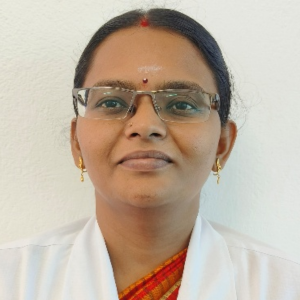
Ms. Nanthini S
Assistant Professor
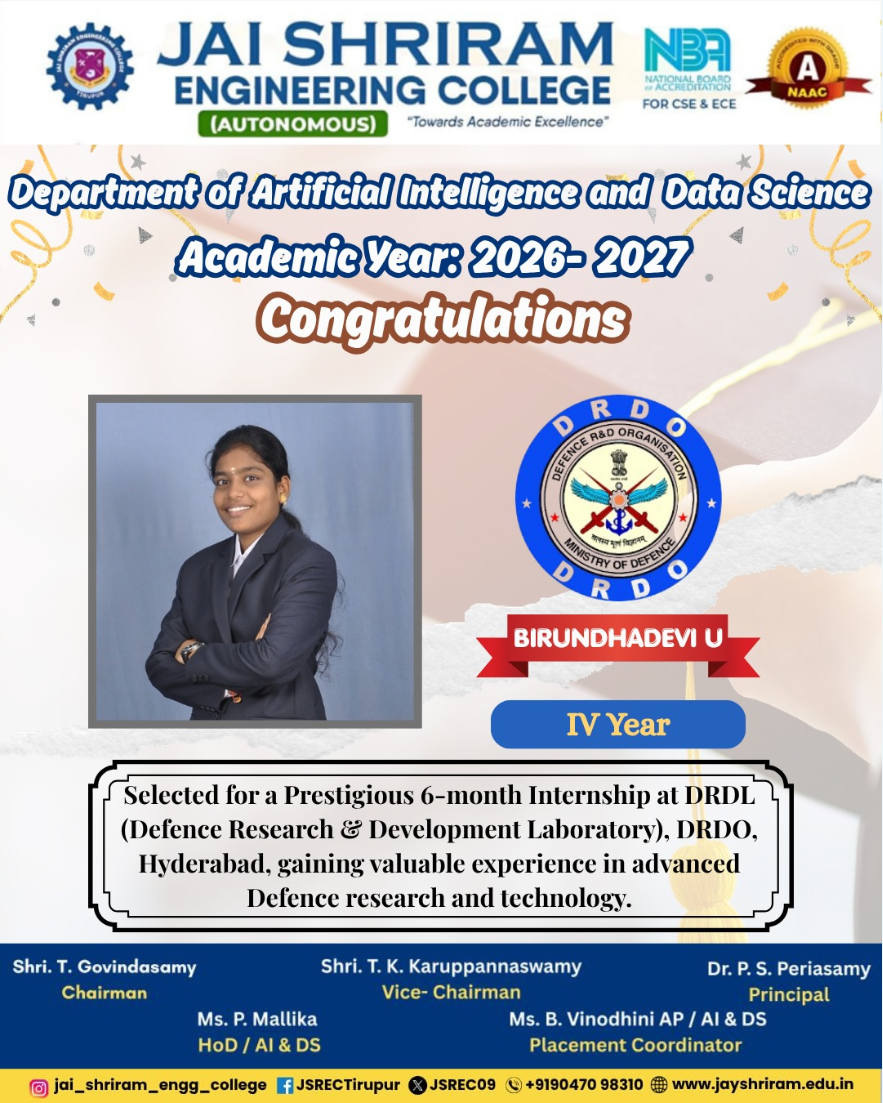
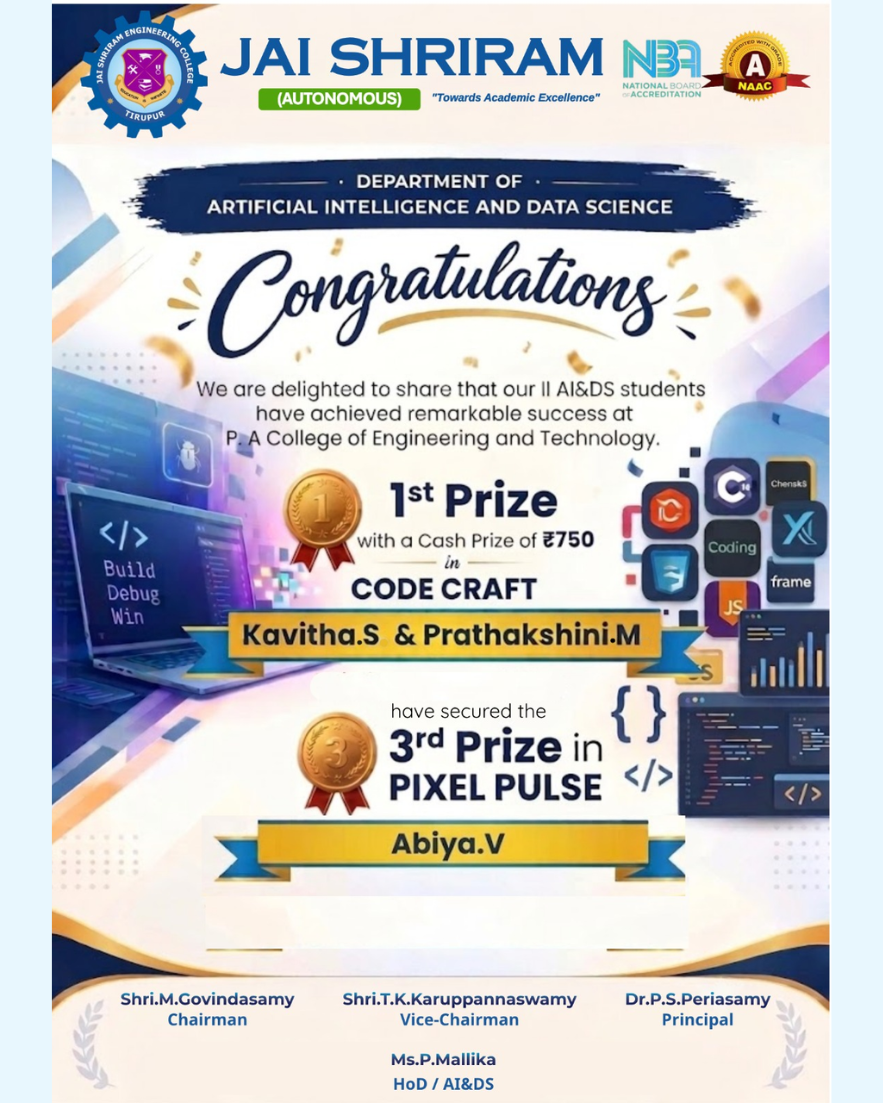
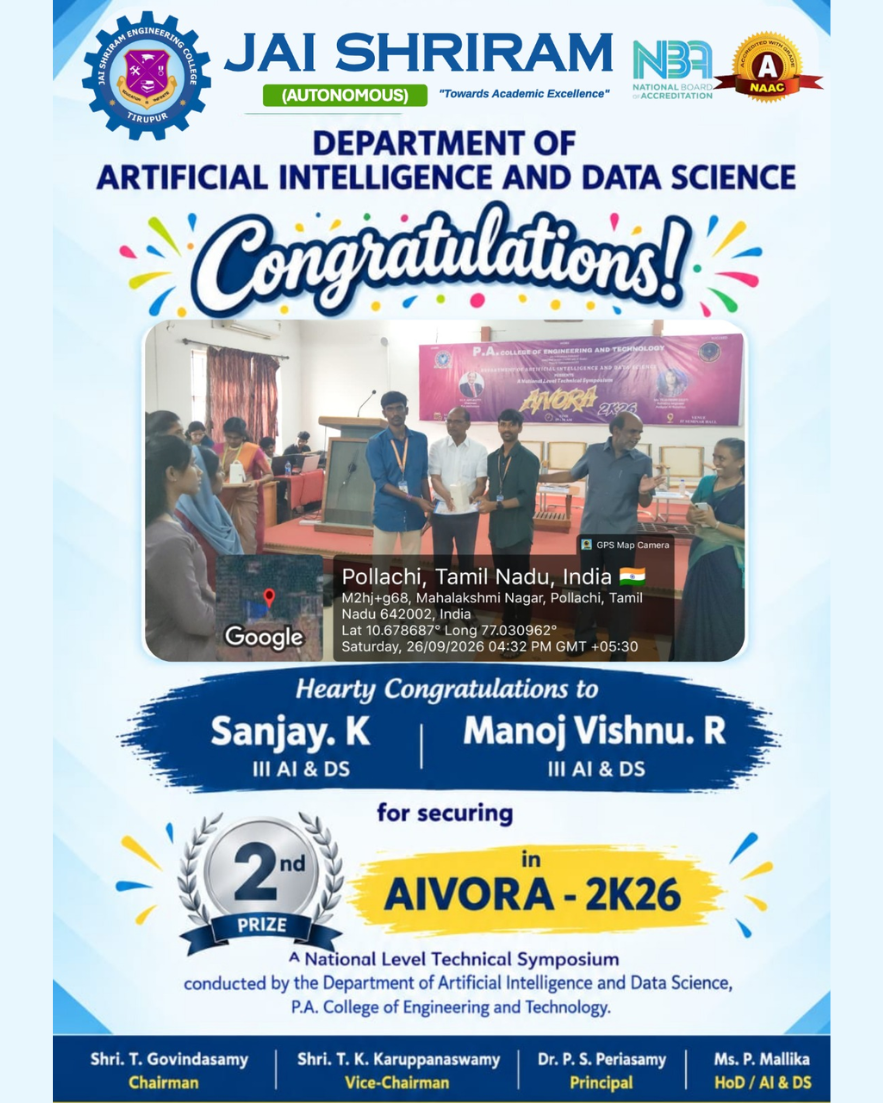
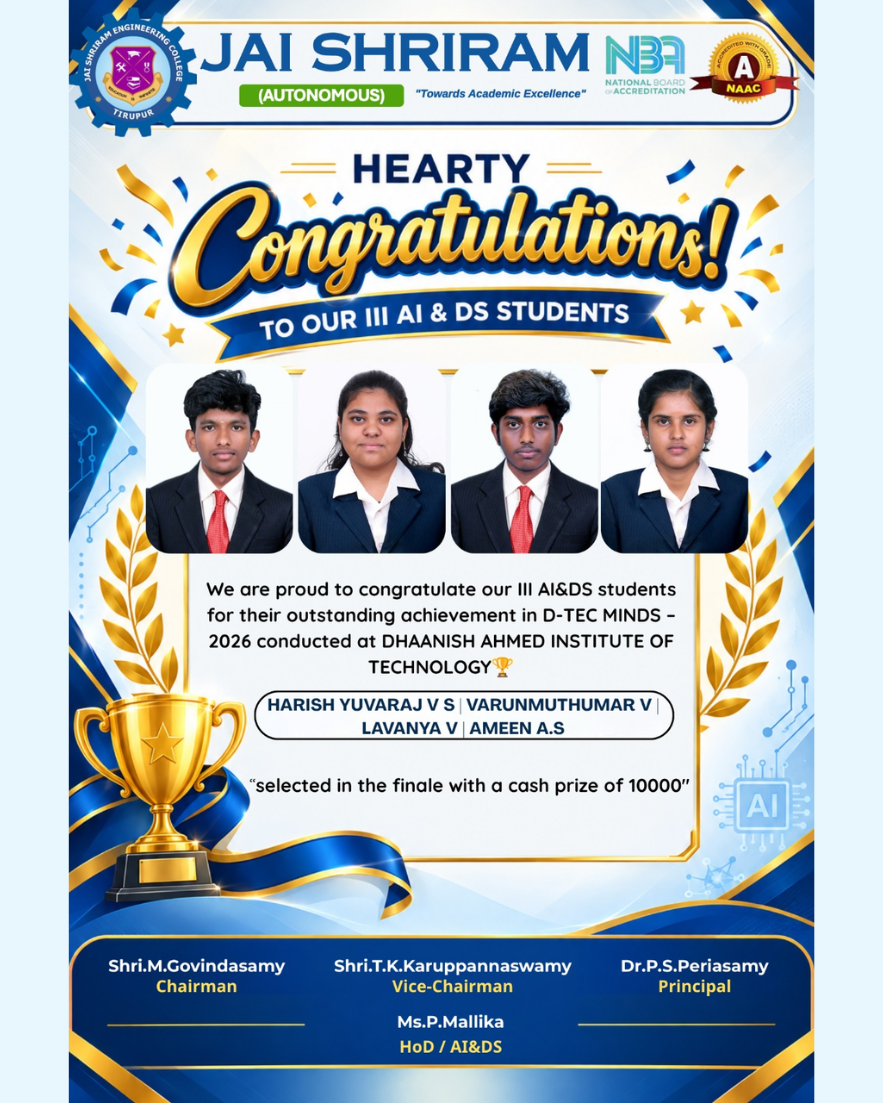
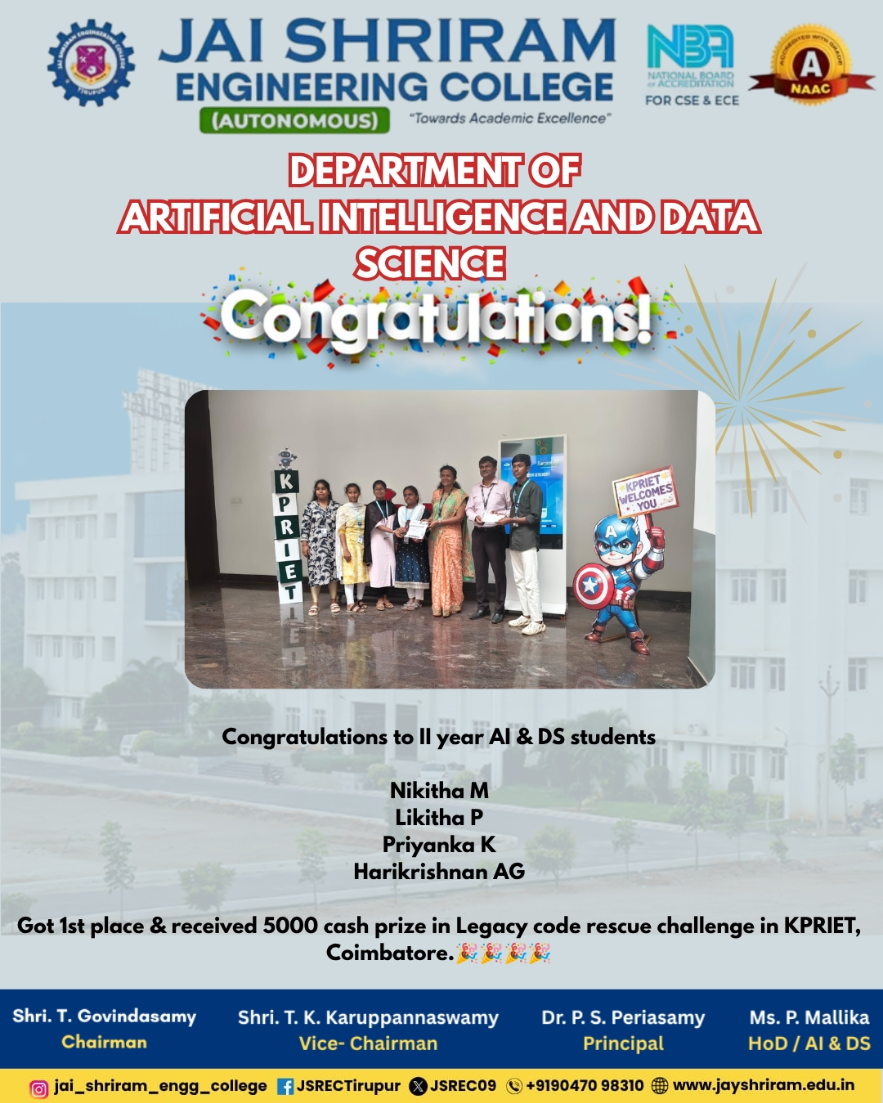
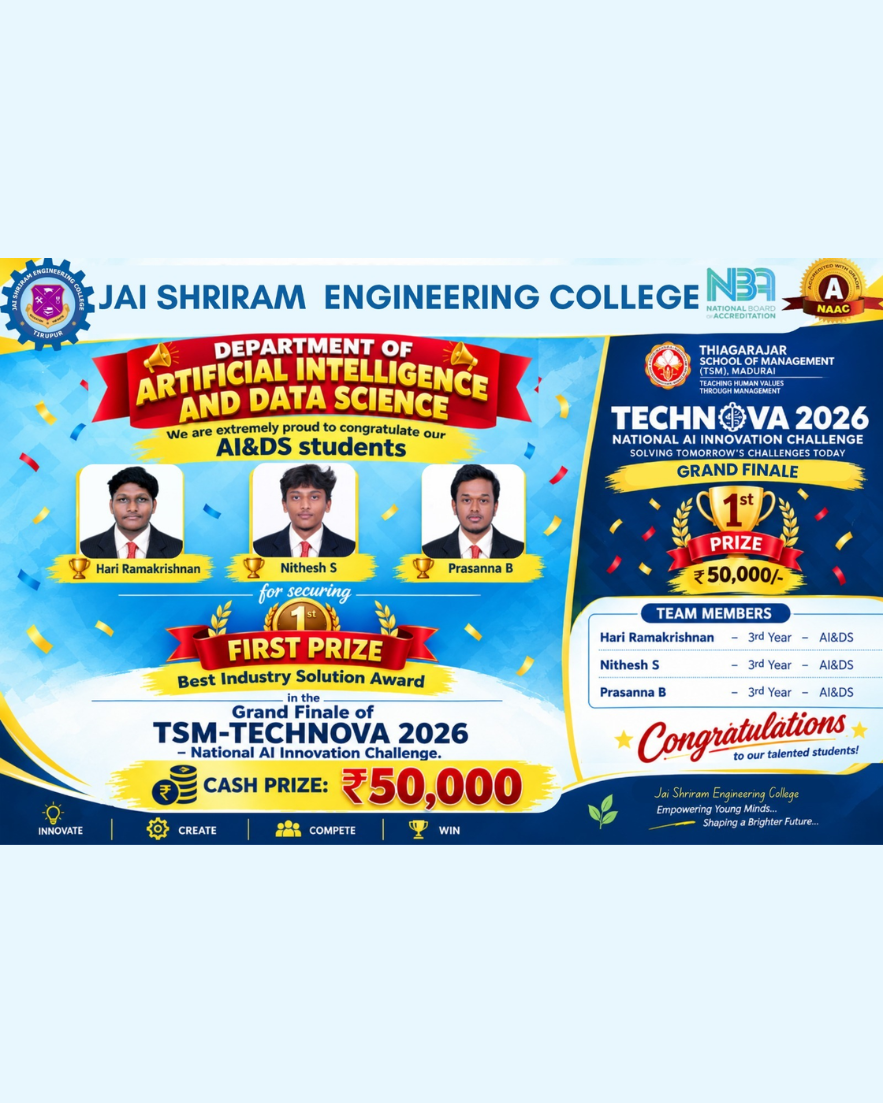
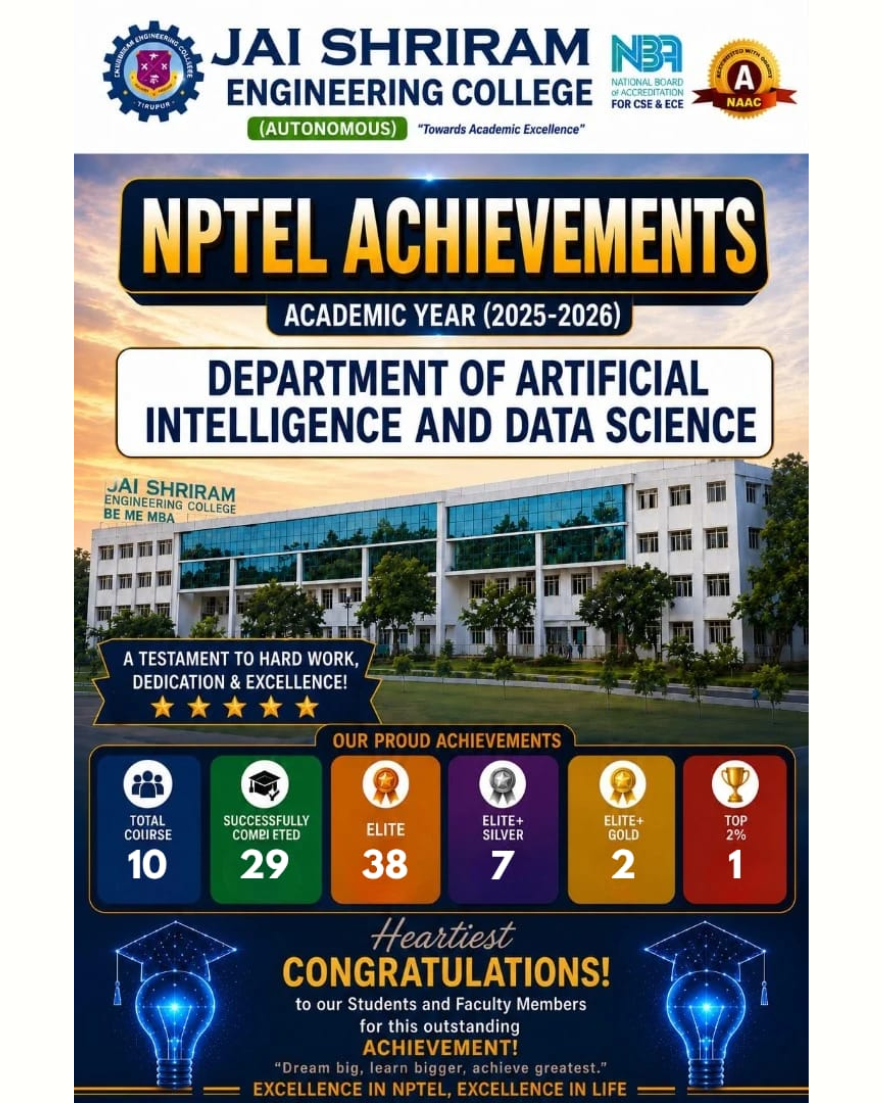
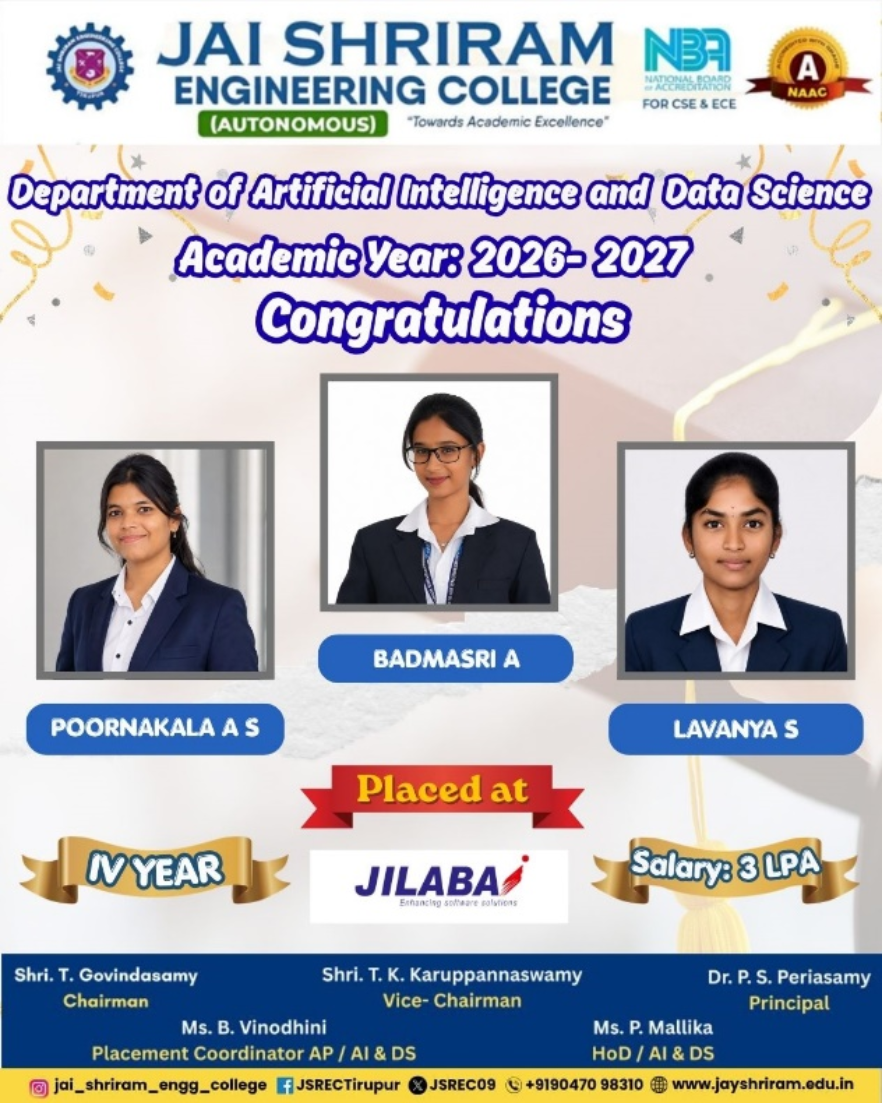
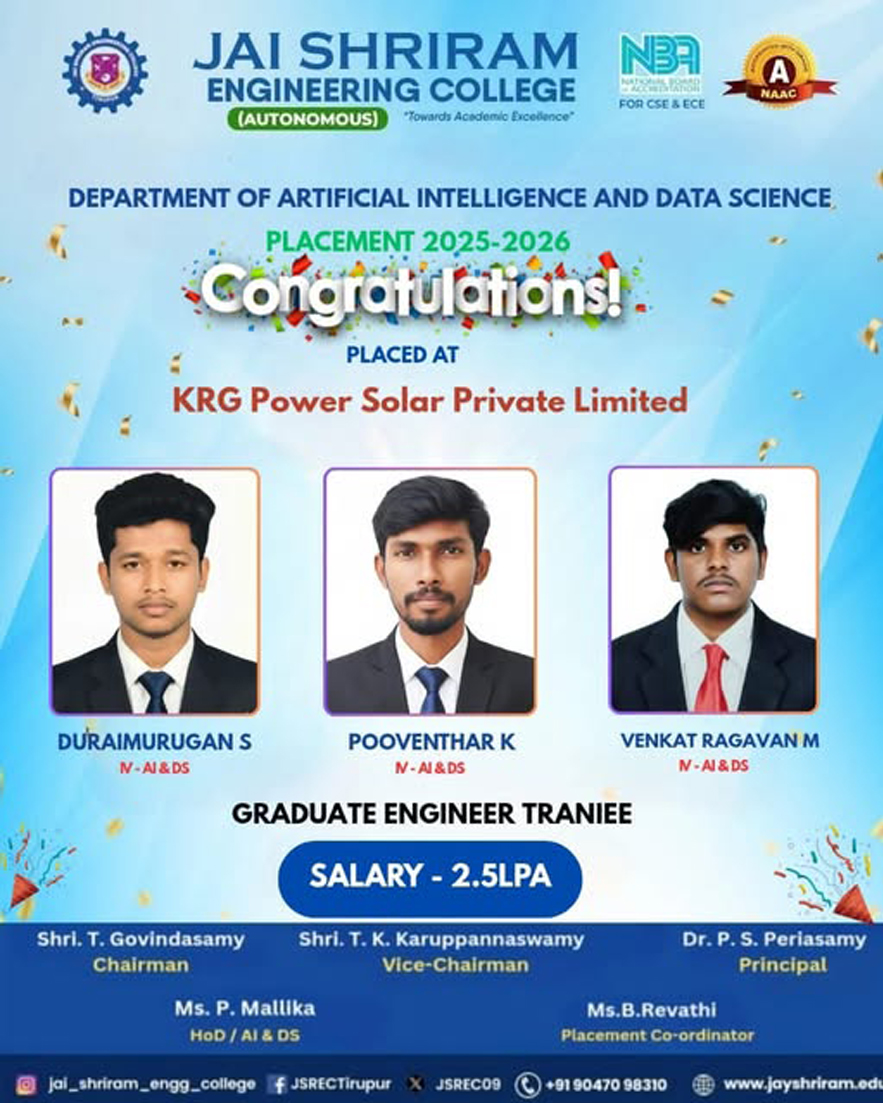
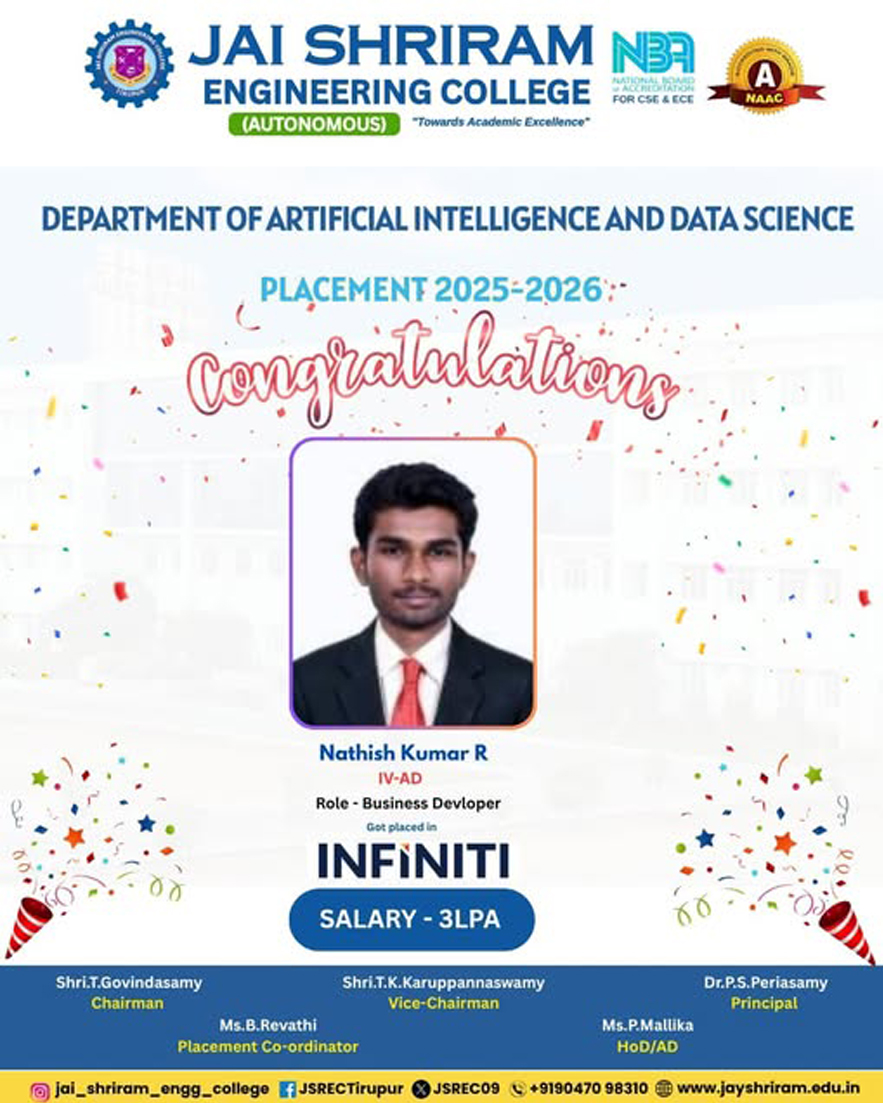
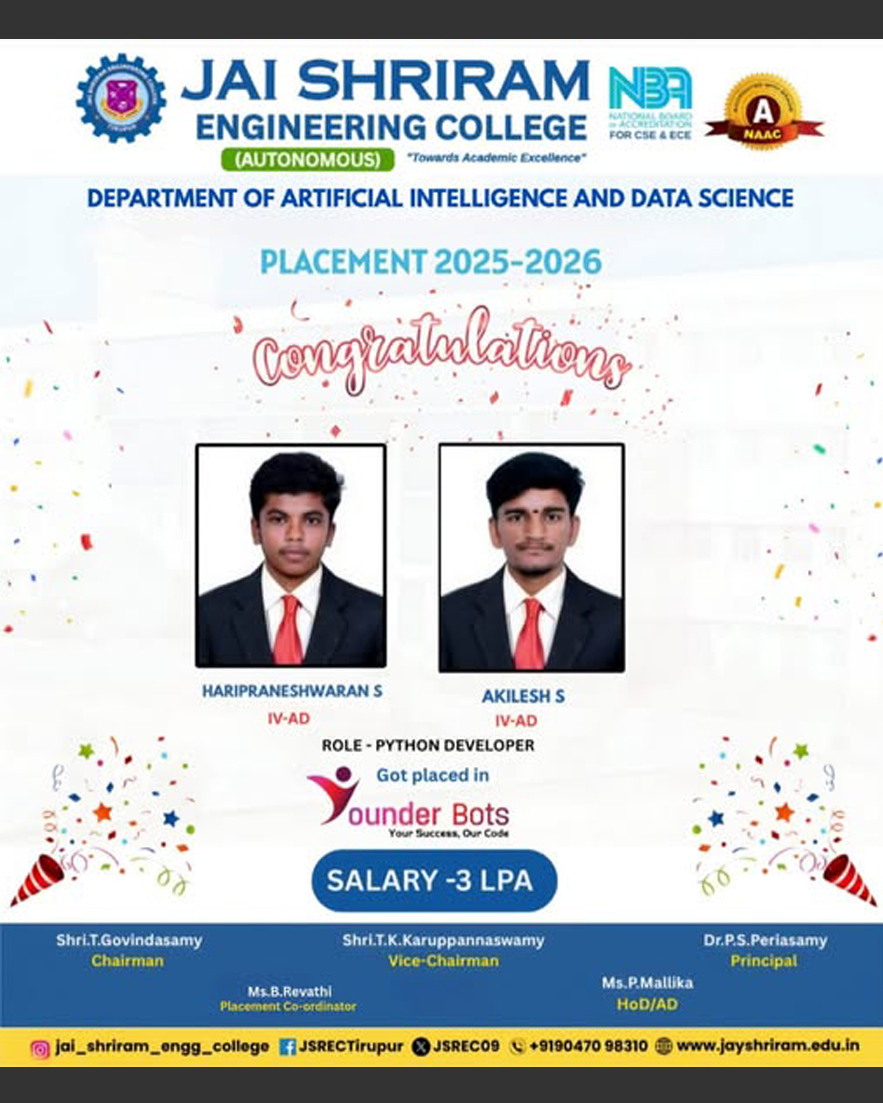
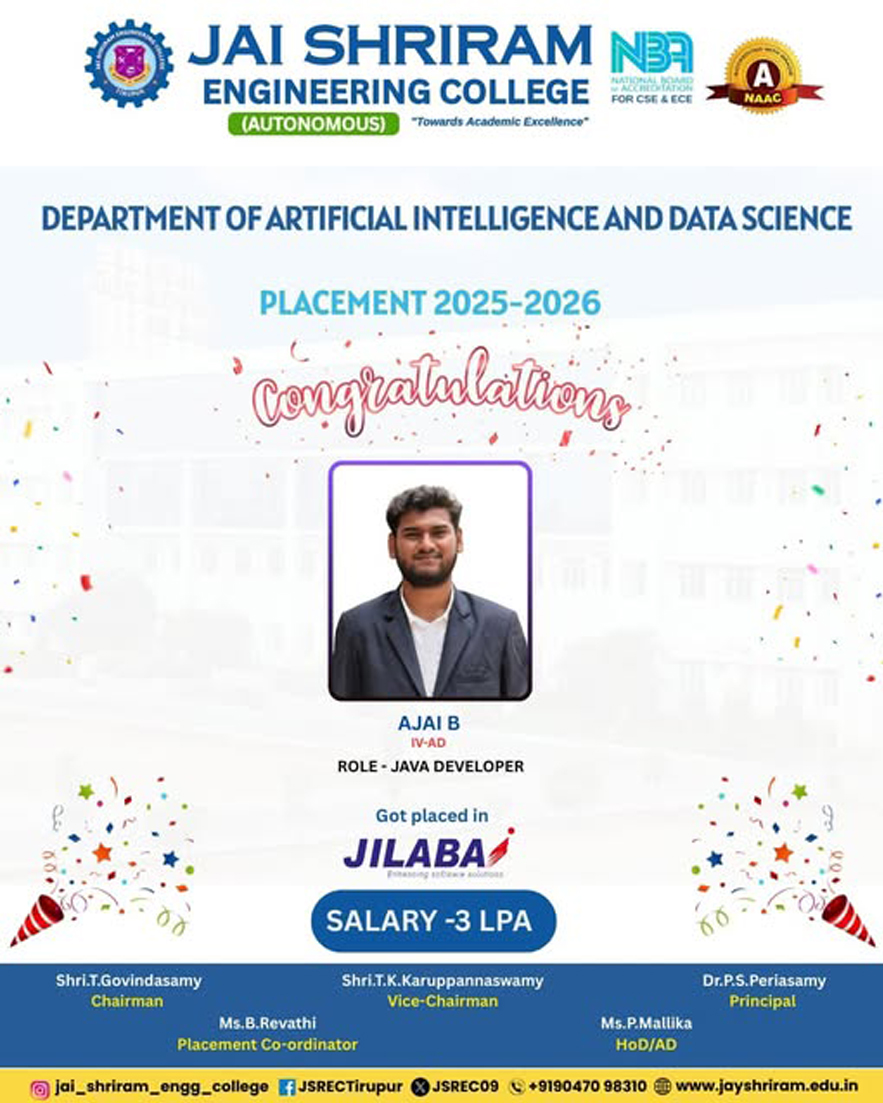
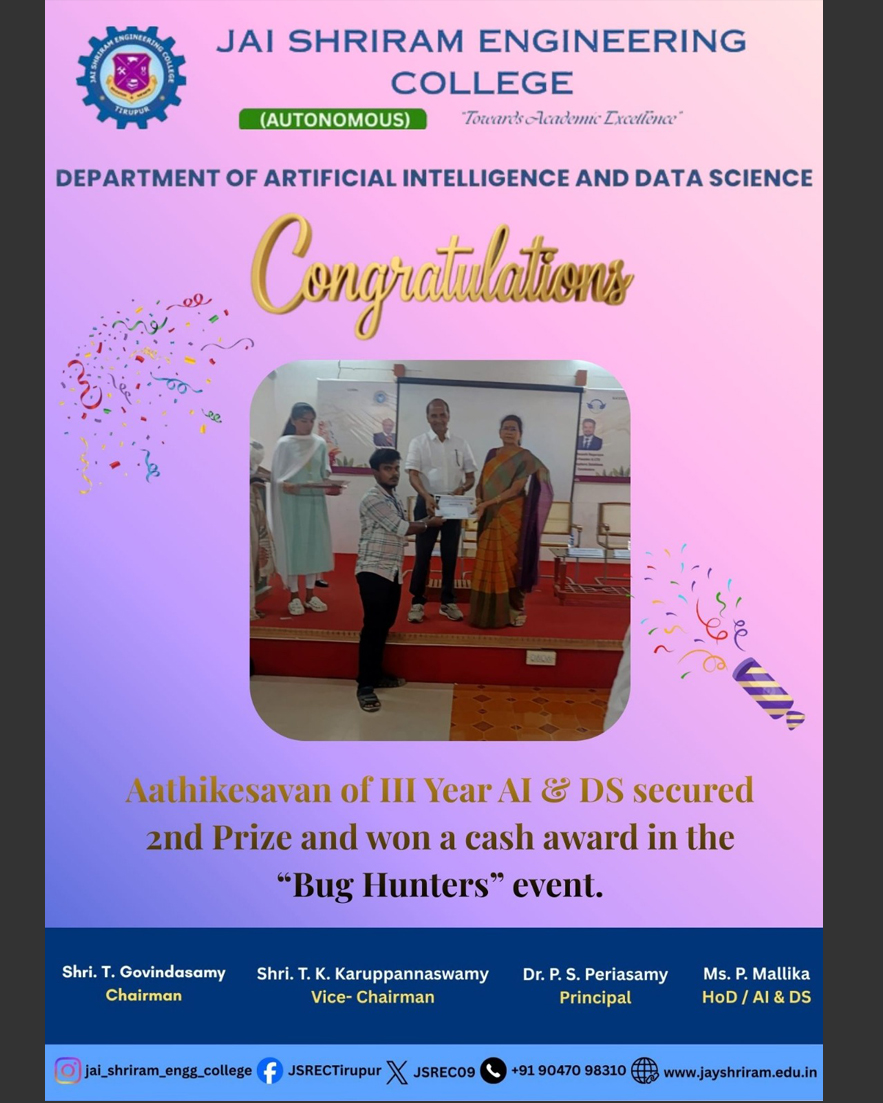
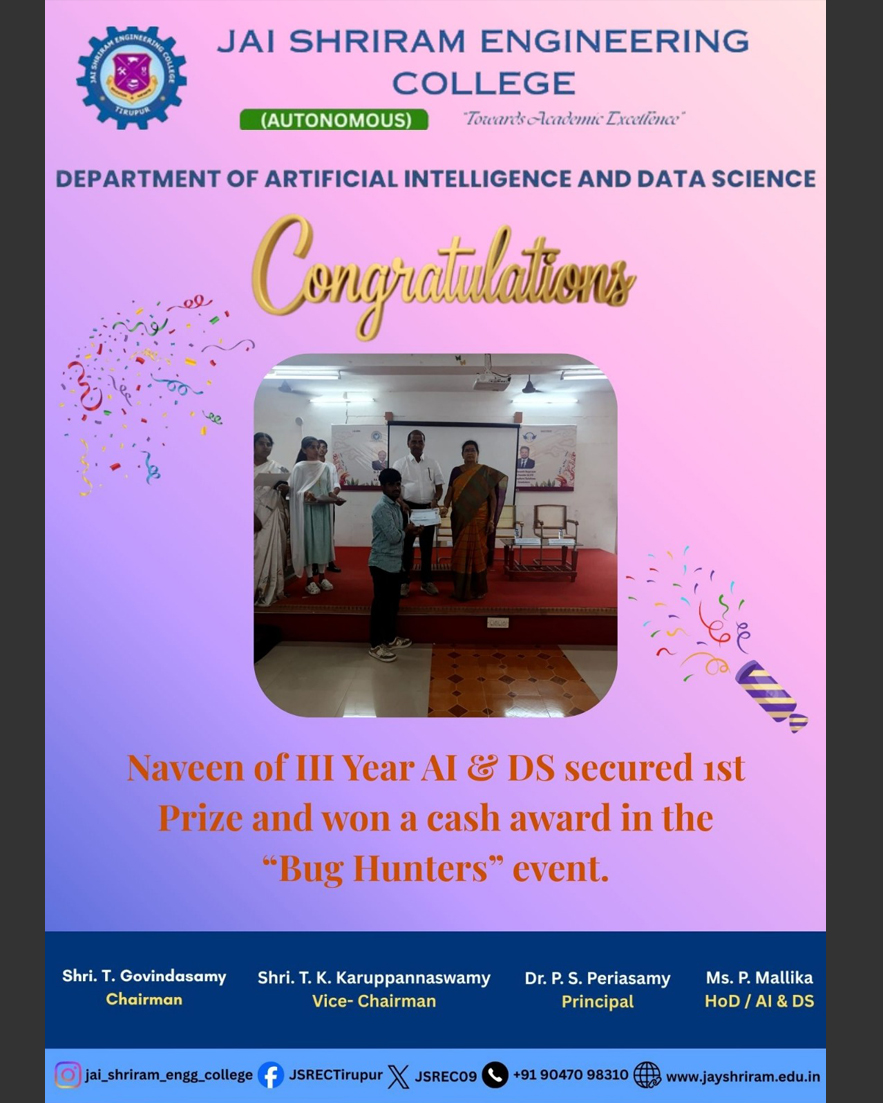
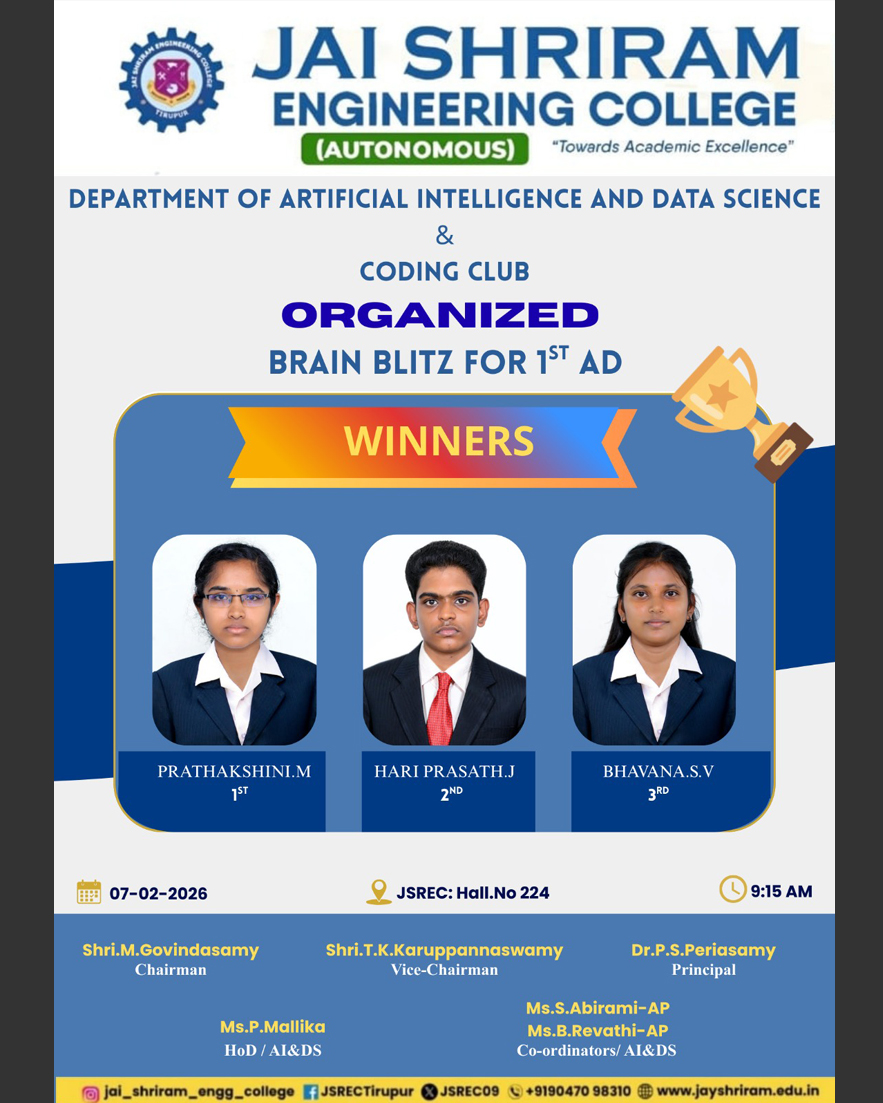
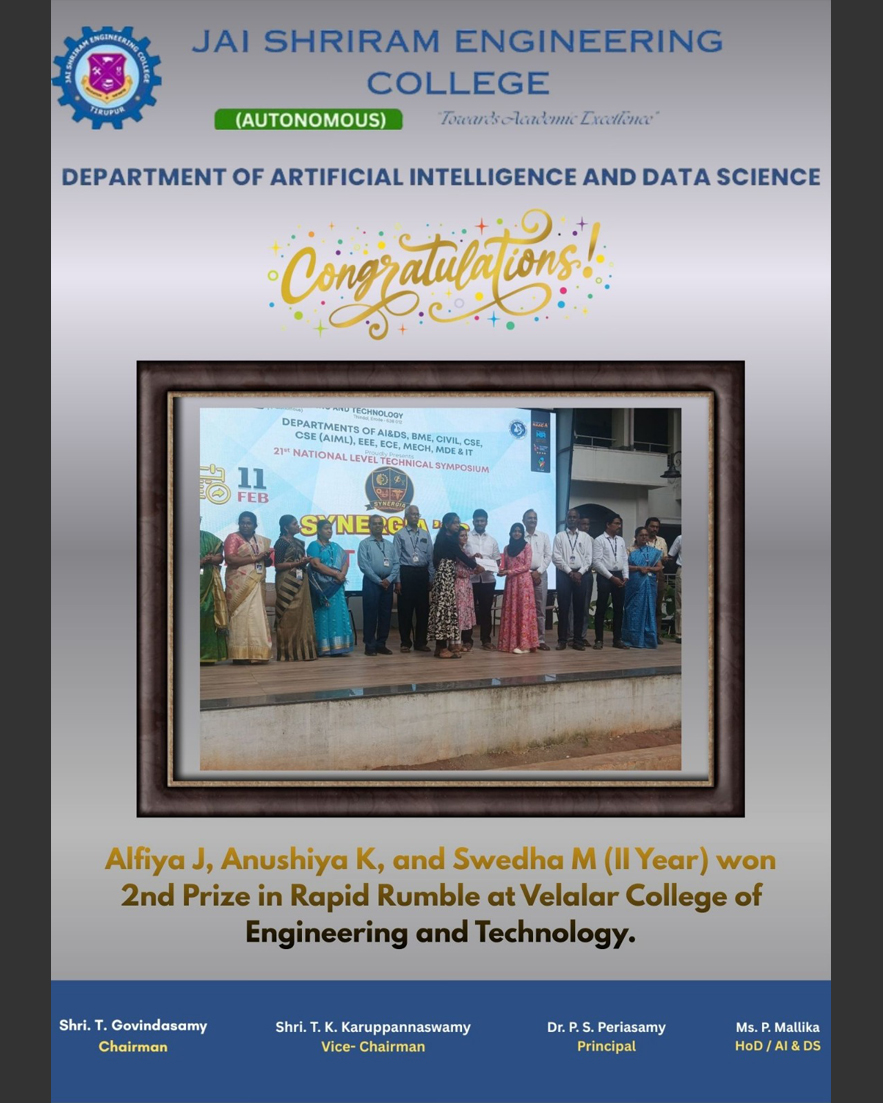
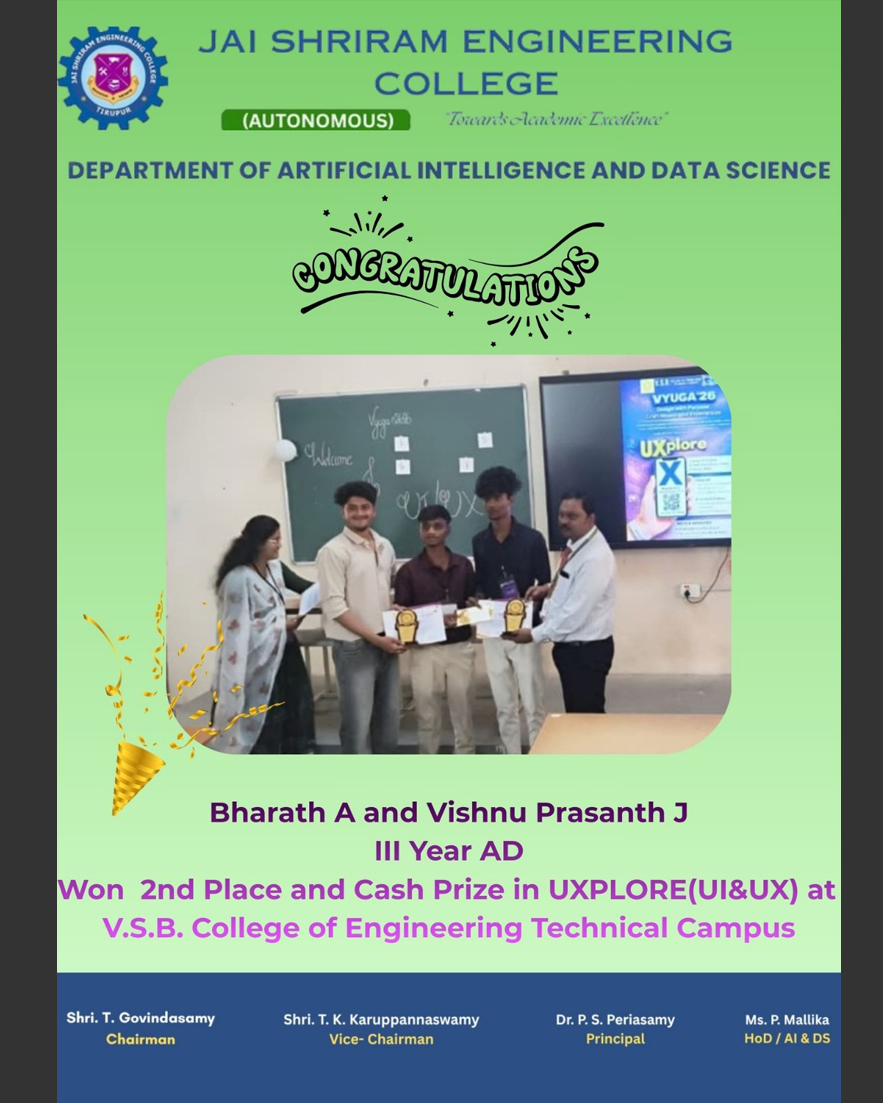
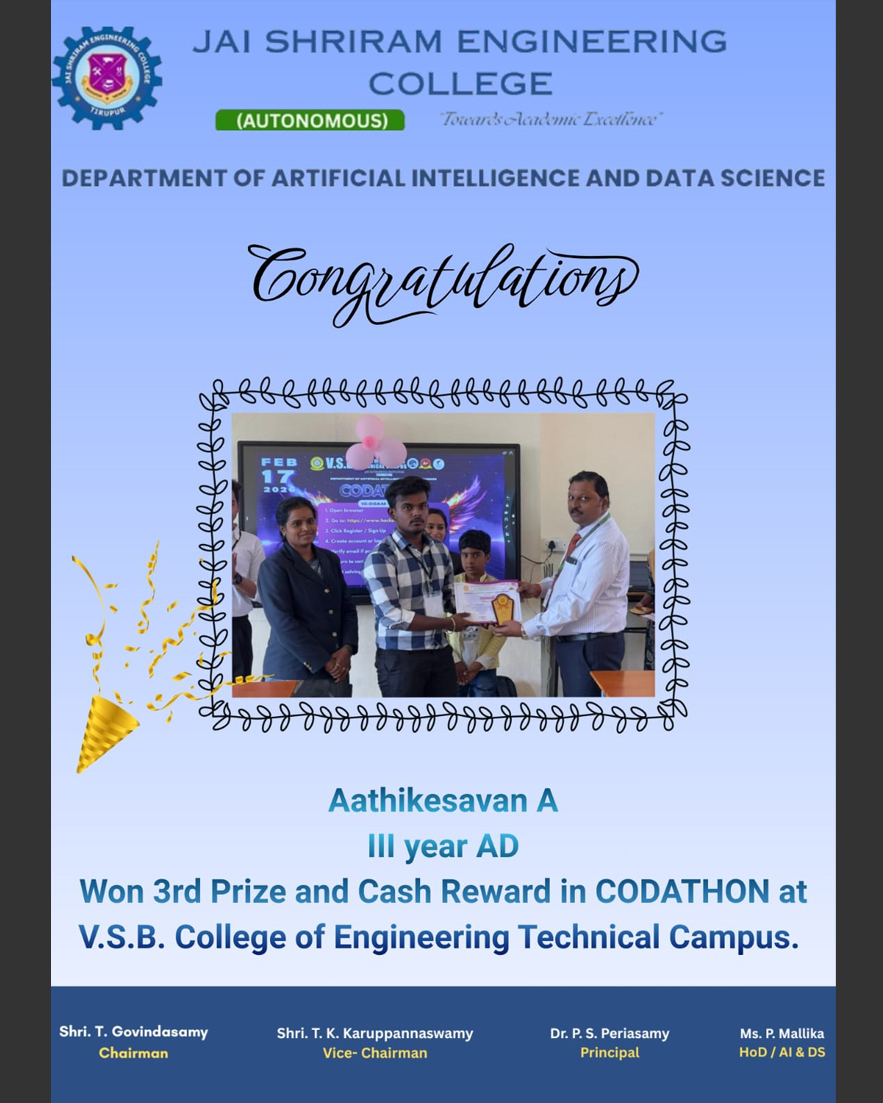
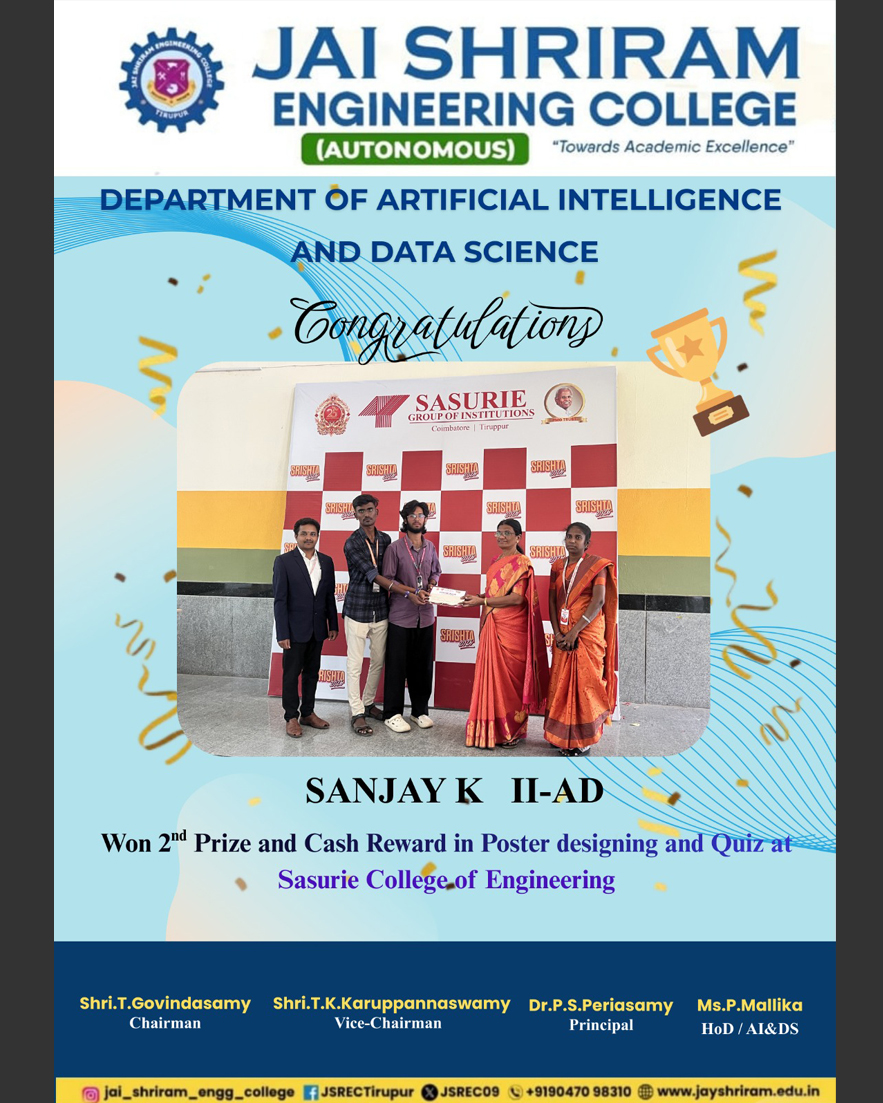
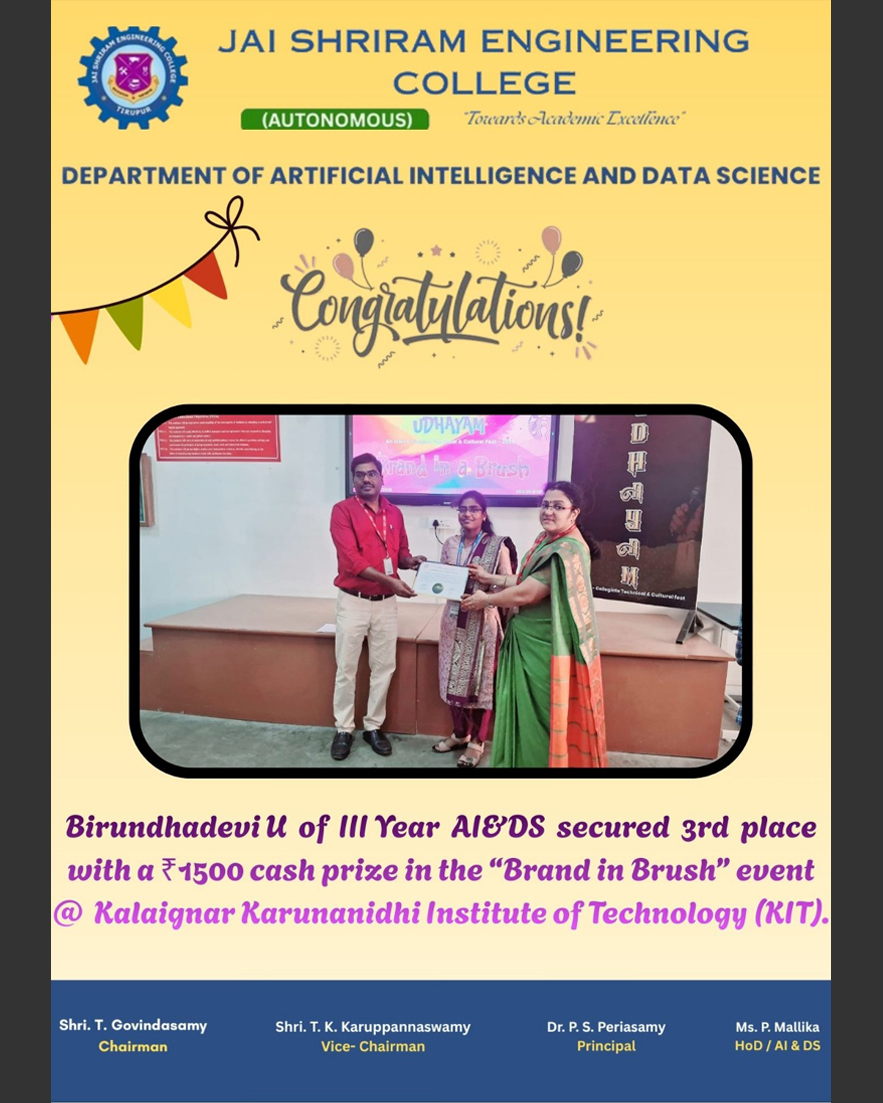
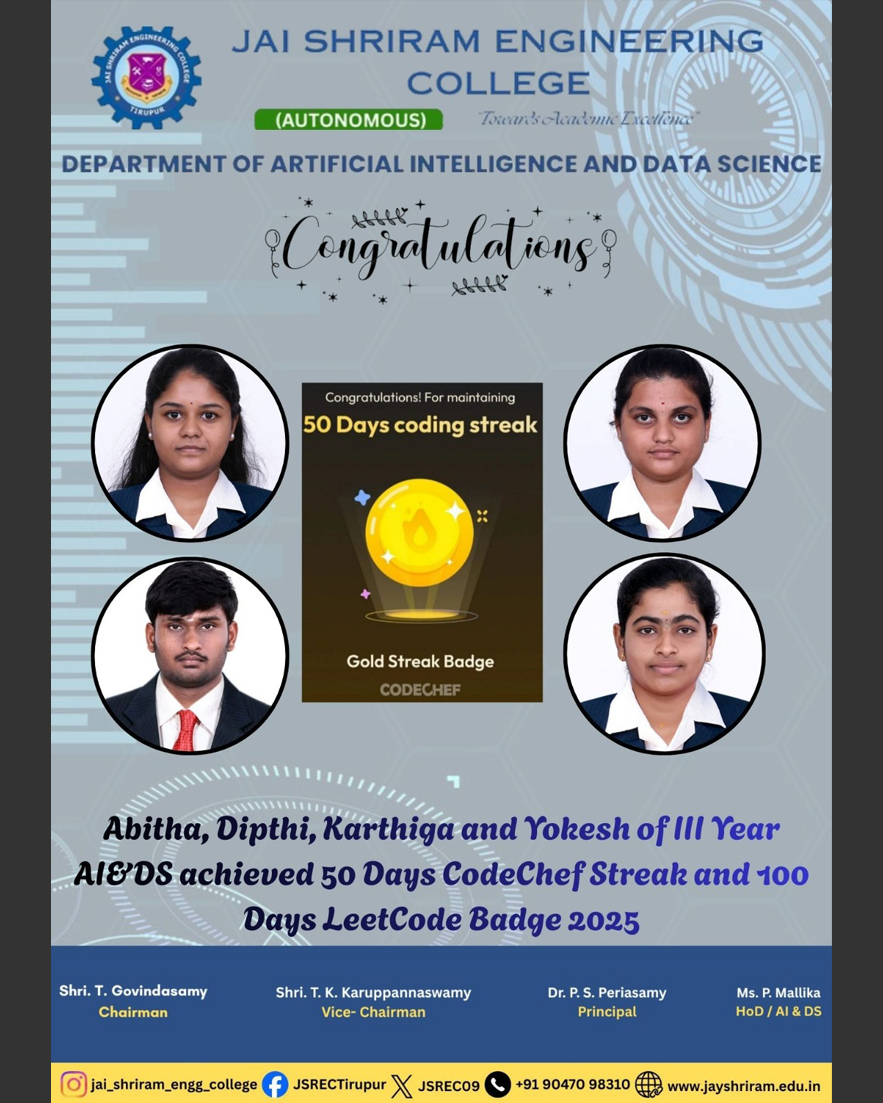
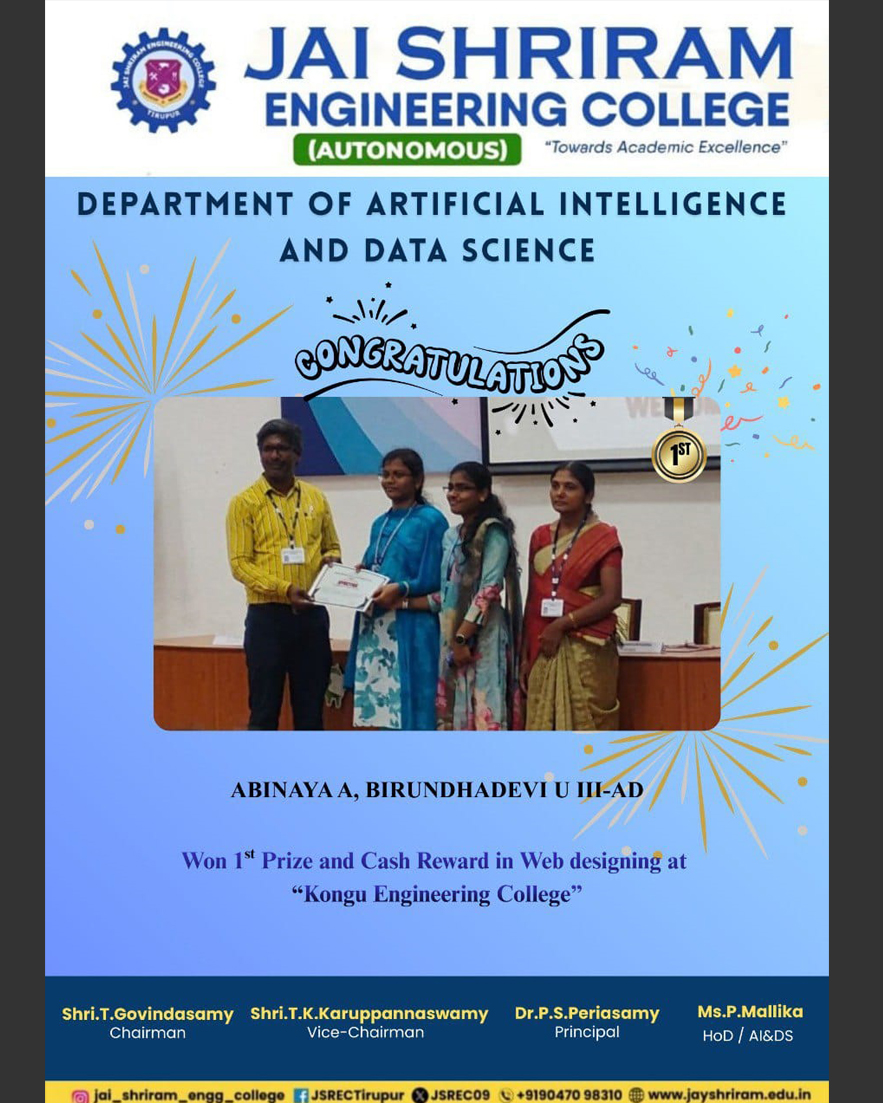
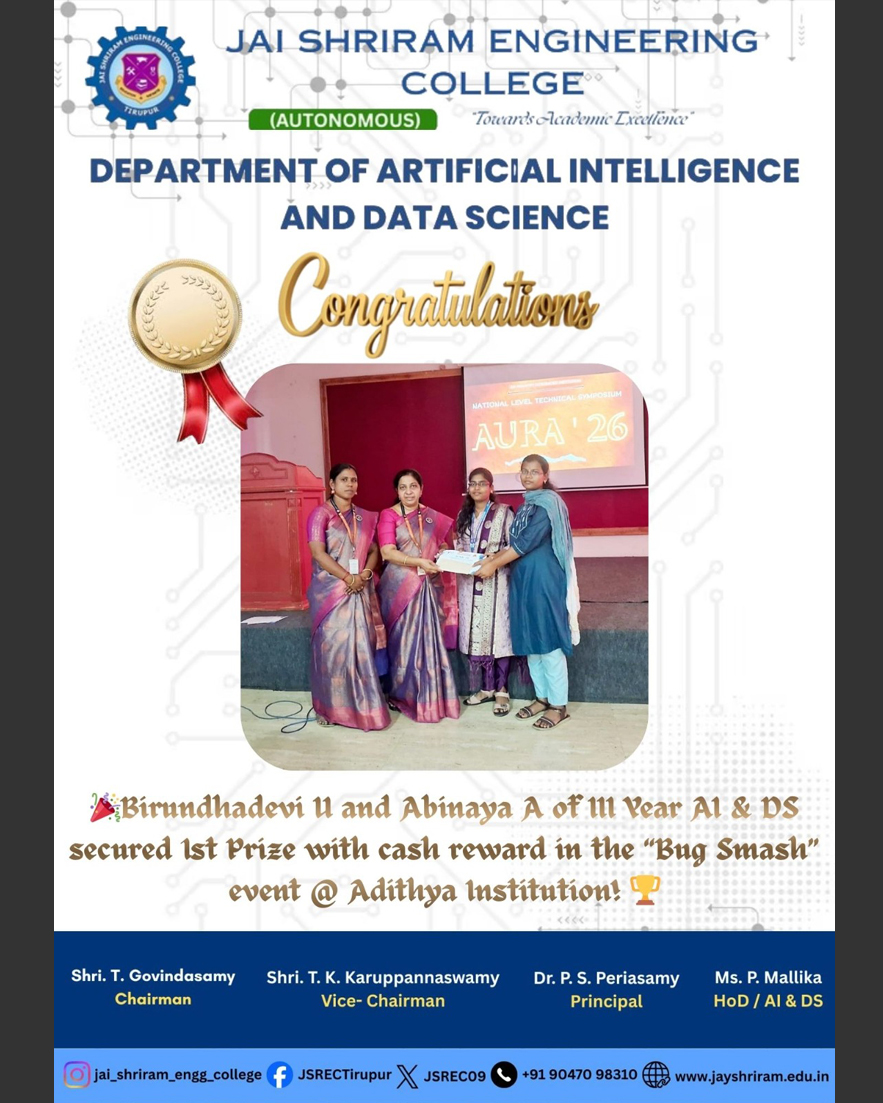
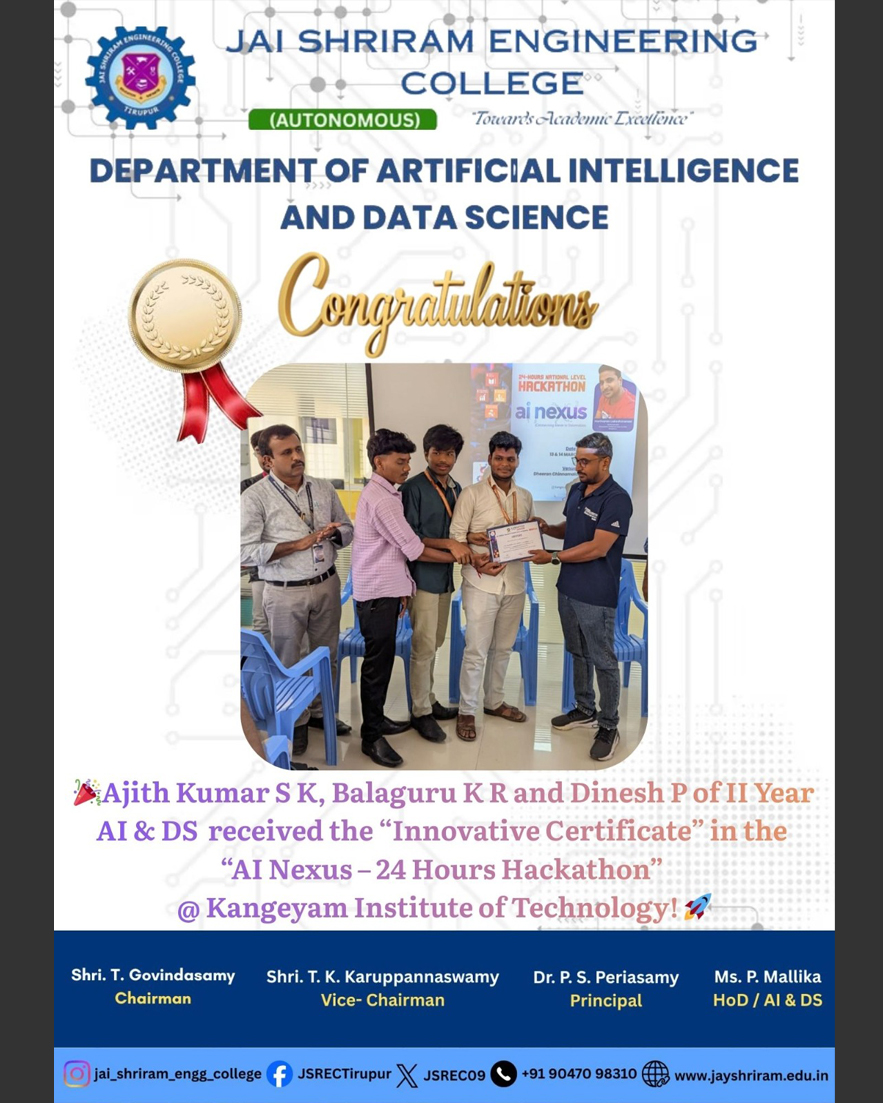
Achievements