

Mechanical Engineering
About the Department
The department was started in the year 2009 for the undergraduate program in B.E Mechanical engineering with an intake of 60 students. The department offers high quality education to the students through very good infrastructure, laboratories, and faculty and by means of exposure to latest technologies.
The department has highly qualified and well experienced teaching staff, who take extreme care for the development of the careers of the students. The department is very much oriented towards research and development as well as in consultancy.
The department incorporates a personal approach to education that is supportive of students and provides fundamental and applied skills in engineering, computing and mathematics.
The learning environment, including faculty, staff, and administration, is focused on the evolving needs of students and society. This allows individuals with diverse backgrounds to enter, succeed, and continue the life-long earning process in their chosen careers.
The students and faculty of the department have the best opportunity of industry-institute interaction through frequent visits to and discussions in the companies managed by the management. The companies, renowned throughout the world, offer a congenial and resourceful environment for internships, visits, training, and projects to the students.
The department is in the verge of establishing centre of excellence with the sole purpose of conducting high quality research and development activities in the latest areas such as hydraulics, materials (smart and nano), robotics, vibrations and automation.
Vision
- To meet the comprehensive needs of core industries by educating the rural students to become an eminent professional Engineers.
Mission
- Impart quality education with emerging skills through innovative learner centric approach.
- Promote cutting-edge research and development through collaboration with core industries.
- Nurture the students with ethical values, creativity and innovation to become an employable Engineers and Entrepreneurs.
Programme Details
After 2 to 4 years of graduation, the graduates will:
- PEO1: Design and Development competency: Undertake challenges in design and development of Industrial problem-solving approach with sound knowledge.
- PEO2: Entrepreneurial and Ethical values for social development: Broaden their horizons to address entrepreneurial and ethical values to meet the societal needs.
- PEO3: Teamwork and communication skills: Expose their ability in teamwork, effective communication and persist learning.
Engineering graduates will be able to:
- PO1: Engineering Knowledge: Apply knowledge of mathematics, natural science, computing, engineering fundamentals and an engineering specialization as specified in WK1 to WK4 respectively to develop solutions for complex engineering problems.
- PO2: Problem Analysis: Identify, formulate, review research literature and analyze complex engineering problems, reaching substantiated conclusions with consideration for sustainable development. (WK1 to WK4)
- PO3: Design/Development of Solutions: Design creative solutions for complex engineering problems and design/develop systems, components and processes to meet identified needs with consideration for public health and safety, whole-life cost, net zero carbon, culture, society and the environment as required. (WK5)
- PO4: Conduct Investigations of Complex Problems: Conduct investigations of complex engineering problems using research-based knowledge including design of experiments, modelling, analysis and interpretation of data to provide valid conclusions. (WK8)
- PO5: Engineering Tool Usage: Create, select and apply appropriate techniques, resources and modern engineering and IT tools, including prediction and modelling, recognizing their limitations to solve complex engineering problems. (WK2 and WK6)
- PO6: The Engineer and The World: Analyze and evaluate societal and environmental aspects while solving complex engineering problems for their impact on sustainability with reference to economy, health, safety, legal framework, culture and the environment. (WK1, WK5 and WK7)
- PO7: Ethics: Apply ethical principles and commit to professional ethics, human values, diversity and inclusion; adhere to national and international laws. (WK9)
- PO8: Individual and Collaborative Team Work: Function effectively as an individual and as a member or leader in diverse and multidisciplinary teams.
- PO9: Communication: Communicate effectively and inclusively within the engineering community and society at large by preparing effective reports, design documentation and presentations, considering cultural, language and learning differences.
- PO10: Project Management and Finance: Apply knowledge and understanding of engineering management principles and economic decision-making to one's own work, as a member and leader in a team, and to manage projects in multidisciplinary environments.
- PO11: Life-Long Learning: Recognize the need for, and have the preparation and ability for, independent and life-long learning, adaptability to new and emerging technologies, and critical thinking in the broadest context of technological change. (WK8)
The Graduates will be able to:
- Thermal Simulation : Conduct experiments and simulate the real time complications involved in the field of thermal and design engineering using modern tools.
- Automation in Advanced Manufacturing : Attain excellence in the area of machine building technology, robotics and automation, 3D printing in manufacturing sector for societal and industrial needs.
- B.E. Mechanical Engineering
UG

Dr.R.J.Golden Renjith Nimal
Professor and Head

Mr.R.Mahendran
Assistant Professor(Sr.G)

Mr.N.Manoj
Assistant Professor

Mr.L.Nirmal Raj
Assistant Professor
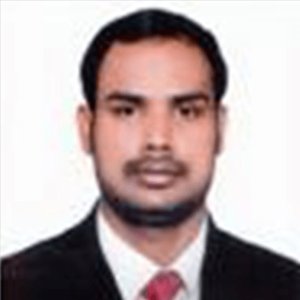
Mr.S.Karthikeyan
Assistant Professor(Sr.G)

Mr.P.Marshalraj
Assistant Professor

Mr. PA.Nigalashik
Assistant Professor

Mr.J.Melvin Jones
Assistant Professor

Mr.B.Anand
Assistant Professor
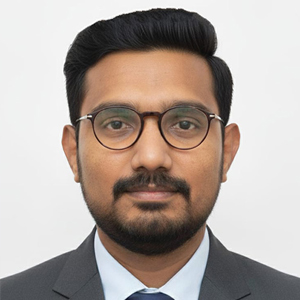
Mr.J.Mozas Santhose Kumar
Assistant Professor
| MECH: 2025-26 | ||||||
| S. No. | Name of the Faculty | Qualification | Designation | Joining Date | Nature of Association Regular/ Contract |
Google Scholar Id |
|---|---|---|---|---|---|---|
| 1 | Dr.R.J.GOLDEN RENJITH NIMAL | Ph.D | Professor & Head | 01.09.2021 | Regular | Google Scholar |
| 2 | Dr.S.NITHIYANANDAM | Ph.D | Professor | 17.06.2016 | Regular | Google Scholar |
| 3 | Dr. M.SUCHARITHA | Ph.D | Associate Professor | 16.06.2025 | Regular | Google Scholar |
| 4 | Mr.R.MAHENDRAN | M.E | Assistant Professor (Sr.G) | 07.06.2012 | Regular | Google Scholar |
| 5 | Mr.N.MANOJ | M.E | Assistant Professor | 11.07.2016 | Regular | Google Scholar |
| 6 | Mr.L.NIRMAL RAJ | M.Tech | Assistant Professor | 29.07.2016 | Regular | Google Scholar |
| 7 | Mr.S.KARTHIKEYAN | M.E | Assistant Professor (Sr.G) | 16.05.2017 | Regular | Google Scholar |
| 8 | Mr. PA.NIGALASHIK | M.E | Assistant Professor | 04.09.2019 | Regular | Google Scholar |
| 9 | Mr.B.ANAND | M.E | Assistant Professor | 02.01.2021 | Regular | Google Scholar |
| 10 | Mr.J.MELVIN JONES | M.E | Assistant Professor | 11.03.2021 | Regular | Google Scholar |
| 11 | Mr.P.MARSHALRAJ | M.E | Assistant Professor | 01.07.2022 | Regular | Google Scholar |
| 12 | Mr.R.GOWTHAM | M.E | Assistant Professor | 16.06.2025 | Regular | Google Scholar |
| 13 | Mr. J. MOZAS SANTHOSE KUMAR | M.E | Assistant Professor | 25.08.2025 | Regular | Google Scholar |
Laboratory Facilities
- Engineering Fundamentals Laboratory
- Manufacturing Technology Laboratory
- Strength of Materials and Fluid Mechanics Laboratory
- Thermal Engineering Laboratory
- Metrology and Dynamics Laboratory
- CAD/CAM Laboratory
- Heat Transfer Laboratory
- Mechatronics/IoT Laboratory
Consultancy
The faculties and students of Department of Mechanical Engineering of JSREC are actively involved in various consultancy works in and around Tamil Nadu. Engaging students for consultancy work under the guidance of the faculty experts helps them to gain practical field knowledge and excel in operating the equipments which helps them to work efficiently with no errors after the completion of their course.
Value Added Courses
The Value-Added Courses is important for students to make them better prepared to meet industry needs as well as develop their own interest and improving the employability skills.
The main aim of the program is:
- To provide students an understanding of the expectations of industry.
- To improve employability skills of students.
- To bridge the skill gaps and make students industry ready.
The following courses which are conducted after class hours or during semester break of every year and these courses are conducted by professionals and make by adding further value to their resume.
- AUTO CAD
- SOLID WORK
- CREO
- CATIA
- ANSYS
Library
Library stands as an epitome of intellectual elegance and a repository of technical education, in particular, Engineering and Technology. Our Library is functioning in a building which acquires an area of 160 Sq.ft and it could accommodate around 8 people with its seating capacity. The library has more than 27069 volumes of books on 7947 titles covering all disciplines of engineering and technology, science & humanities and management studies books for students and faculty’s reference.
The library has an extensive collection of 1007 book. Anna University previous years question papers from the year 2003 to the current year are always kept ready for students’ further reference.
Conference
International Conference on Advances in materials, machining and additive manufacturing -2024
To know more click here
Centre of Excellence
Centre of Excellence in Additive Manufacturing (CEAM)
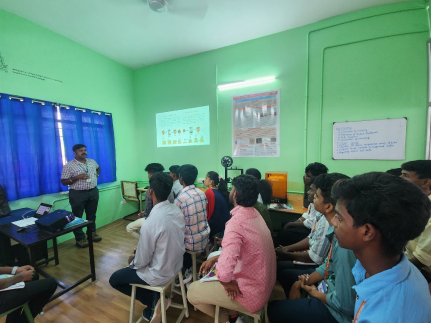
Value added course conducted for students through CEAM
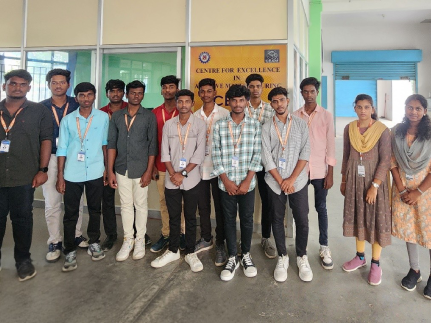
Pilot batch of students who have attended the first Boot Camp
Visits from Eminent Persons
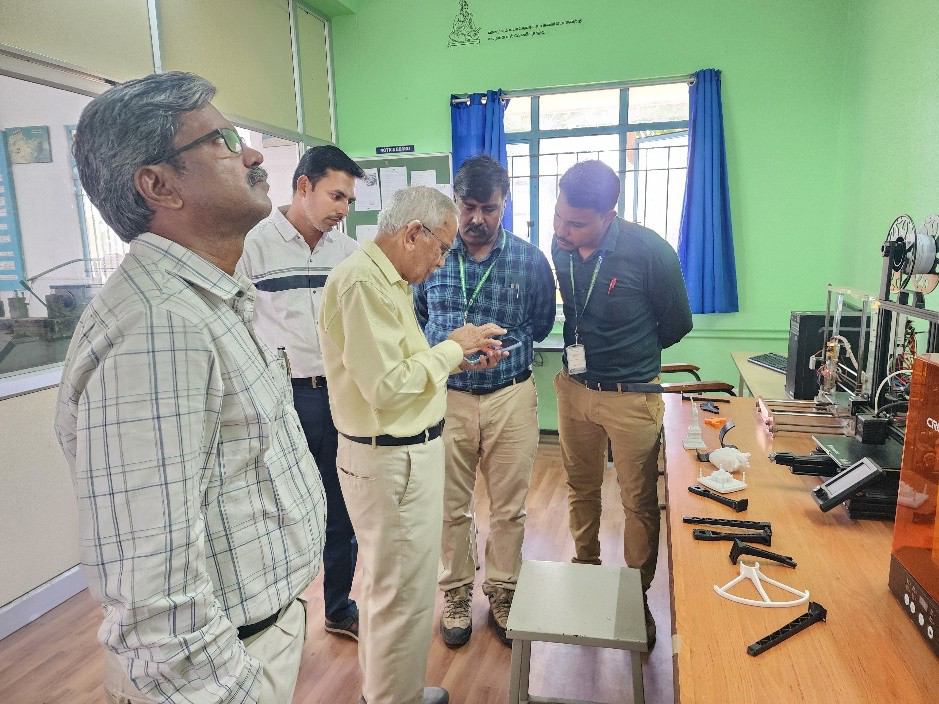
Mr. Rengasamy
Senior Consultant, Tata Industries
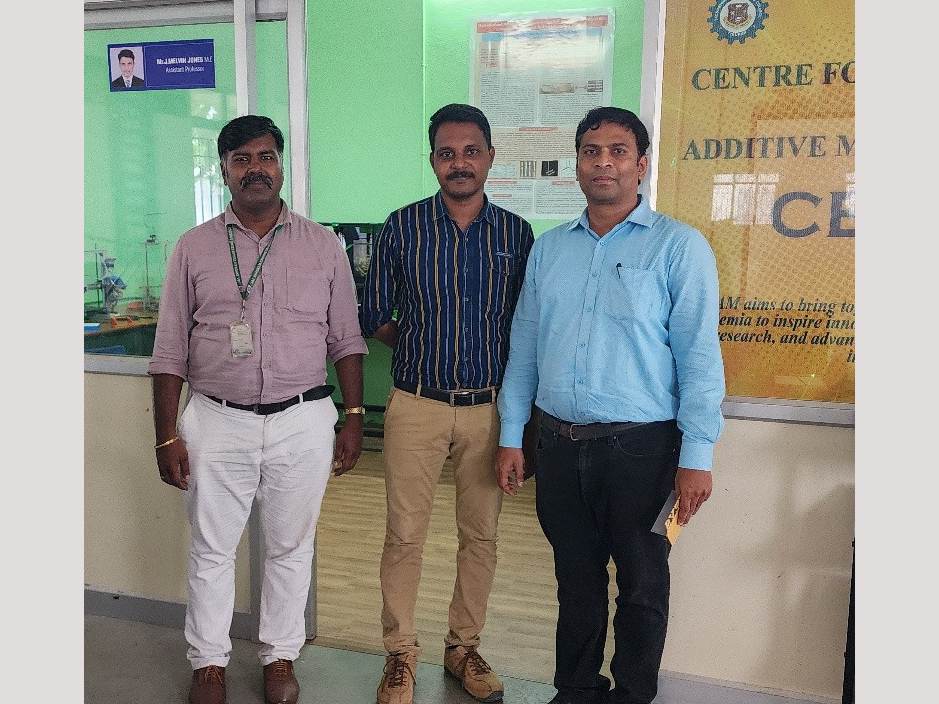
Dr. Chakradhar Dupadu
Associate Professor, Mechanical Engineering, IIT Palakkad
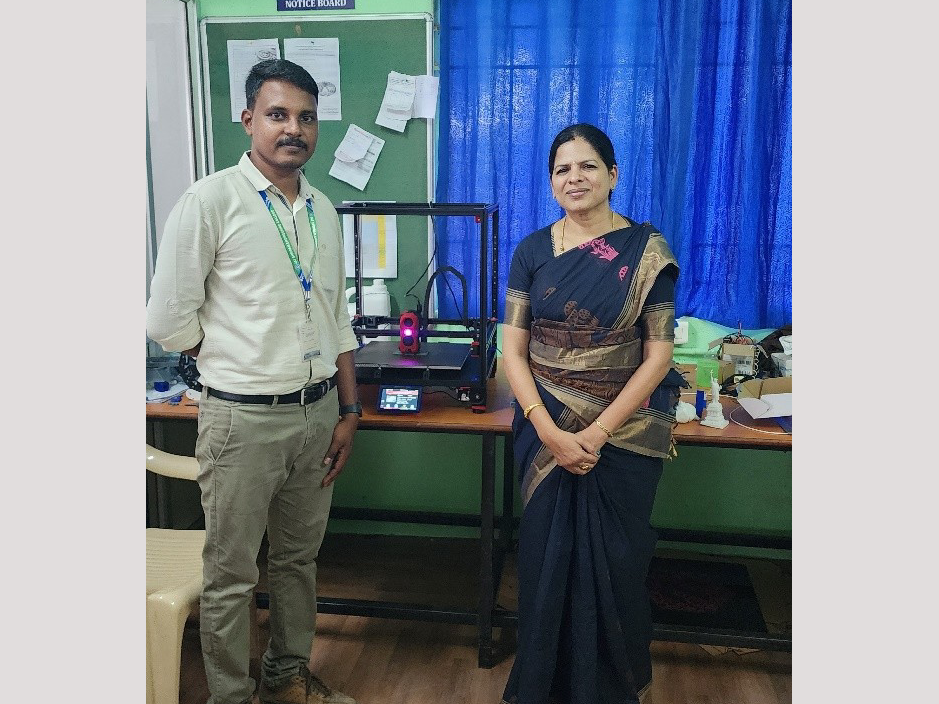
Mrs. Subathra
CEO - PVR Foods, Coimbatore
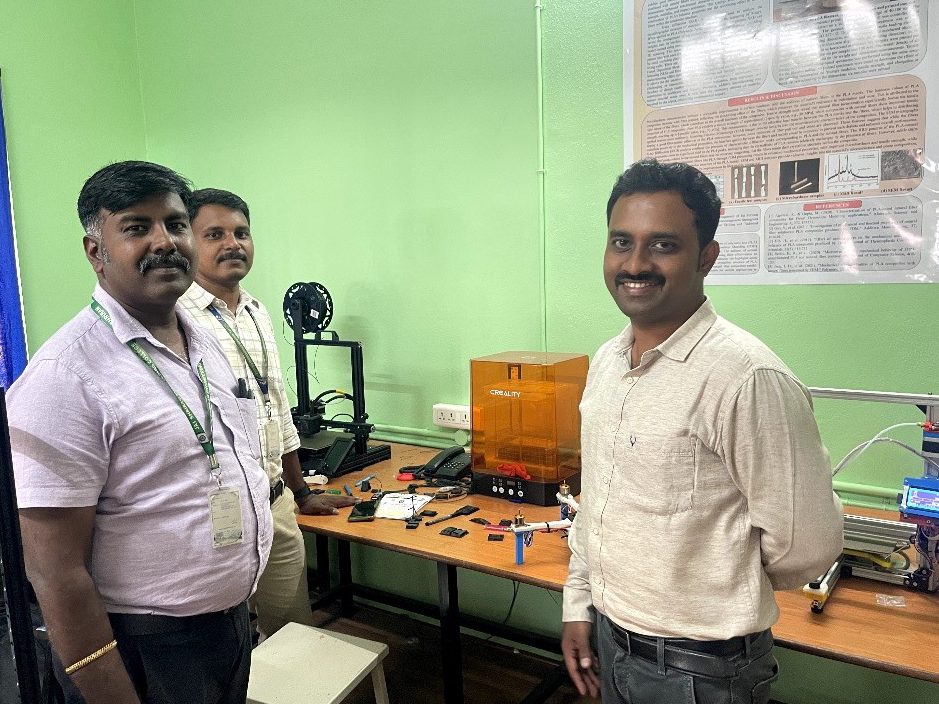
Mr. John Stephen (Alumni)
Senior Manager
Saint Gobain Pvt Ltd., Perundurai, Tamil Nadu.
Products developed from CEAM
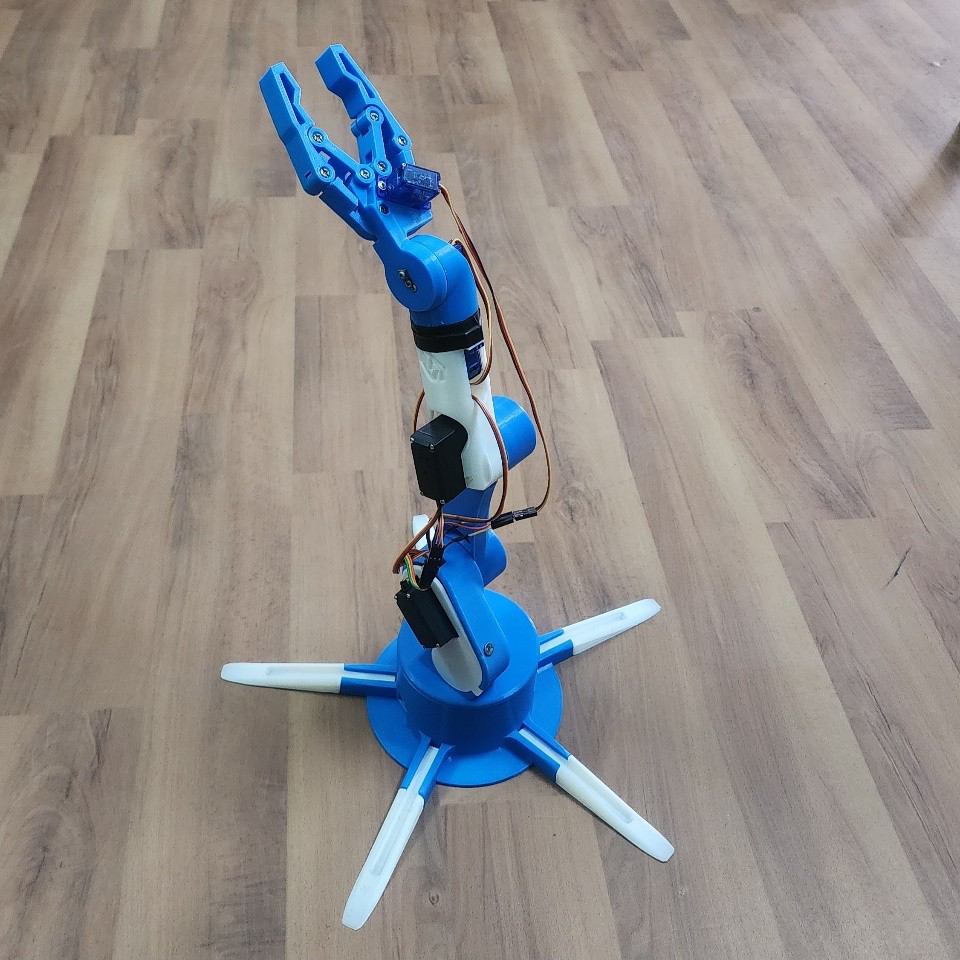
A 6-Axis Robotic Arm
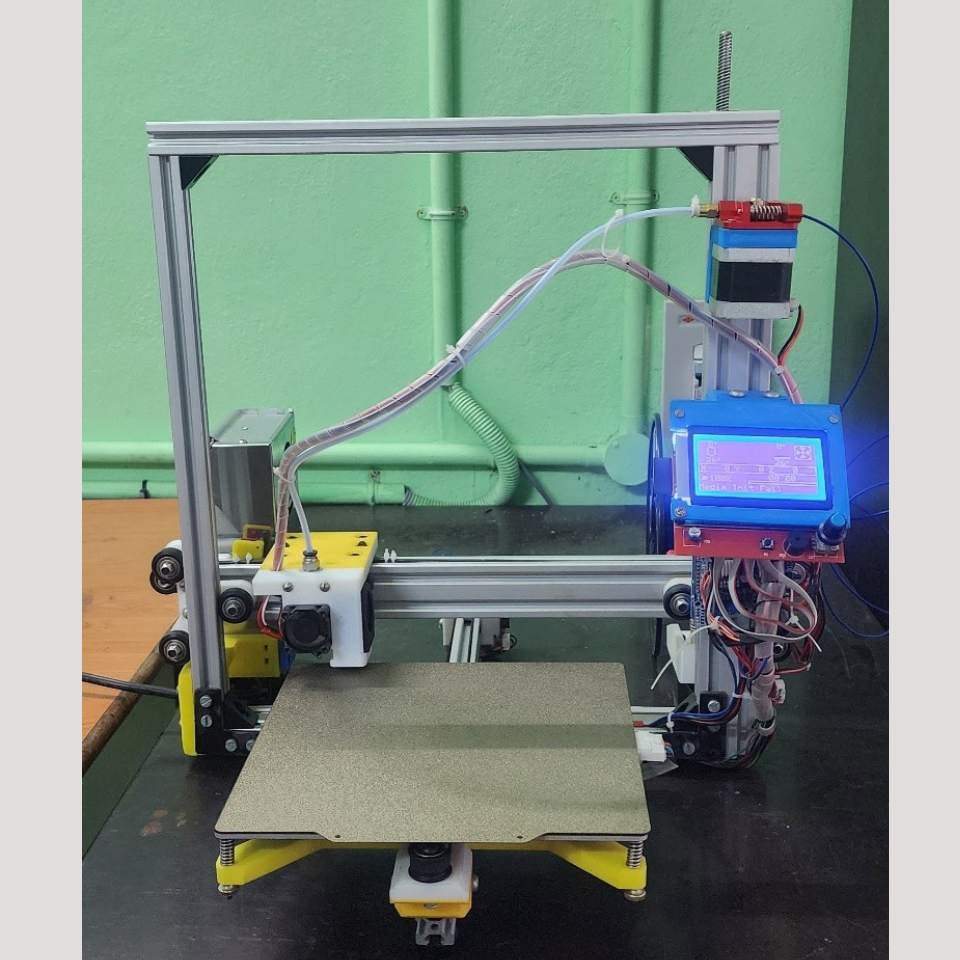
Bed Slinger type FDM Printer
A 3D Printed Drones
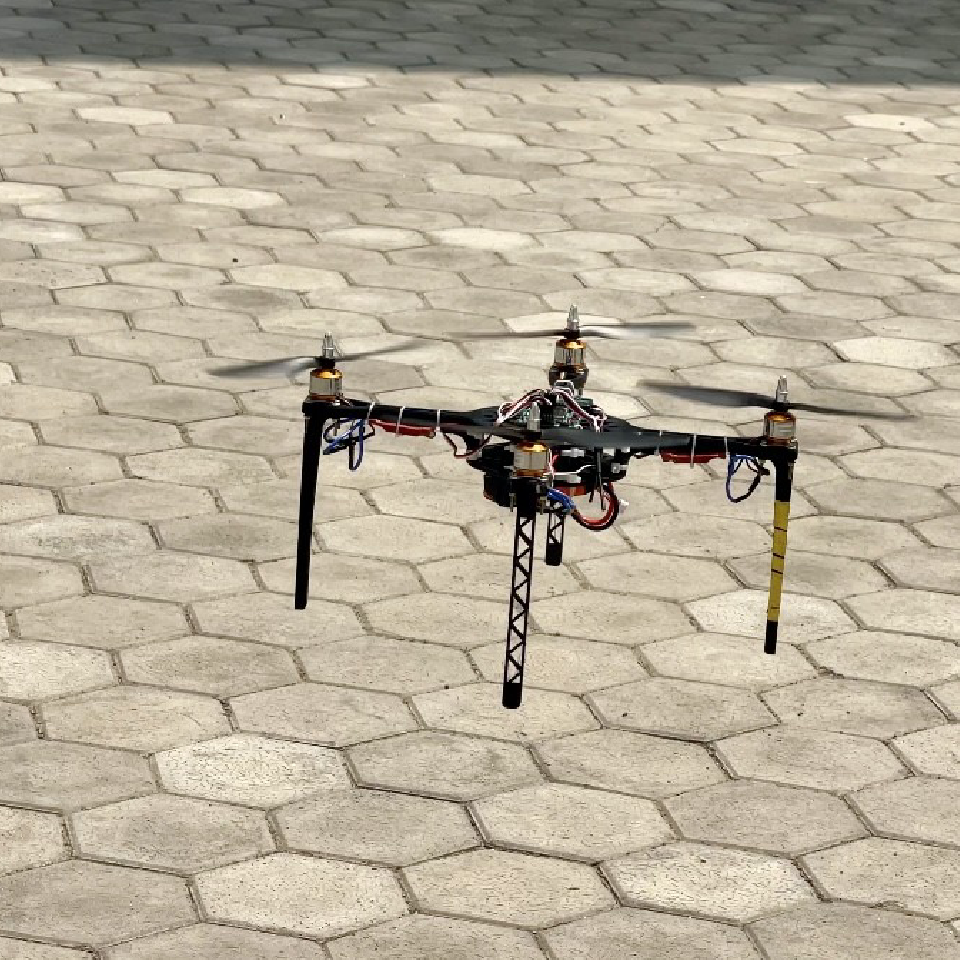
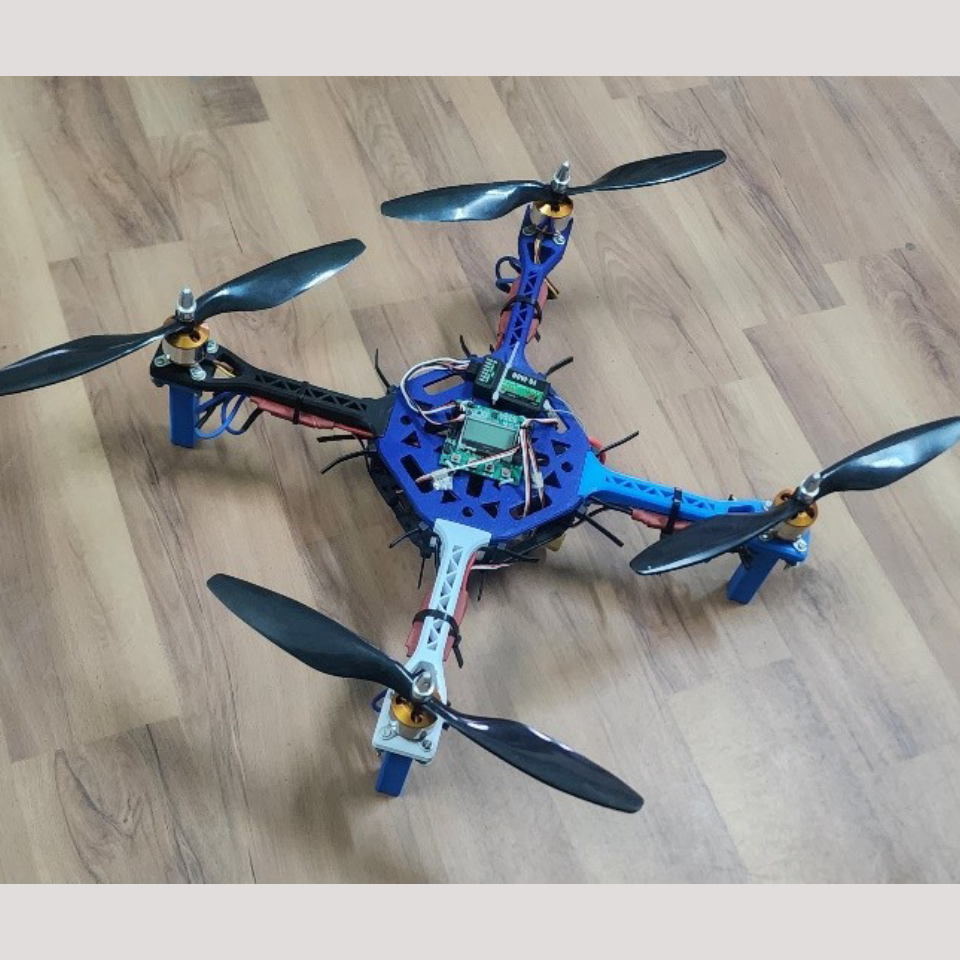
A High Speed Core XY FDM Printers Developed from CEAM
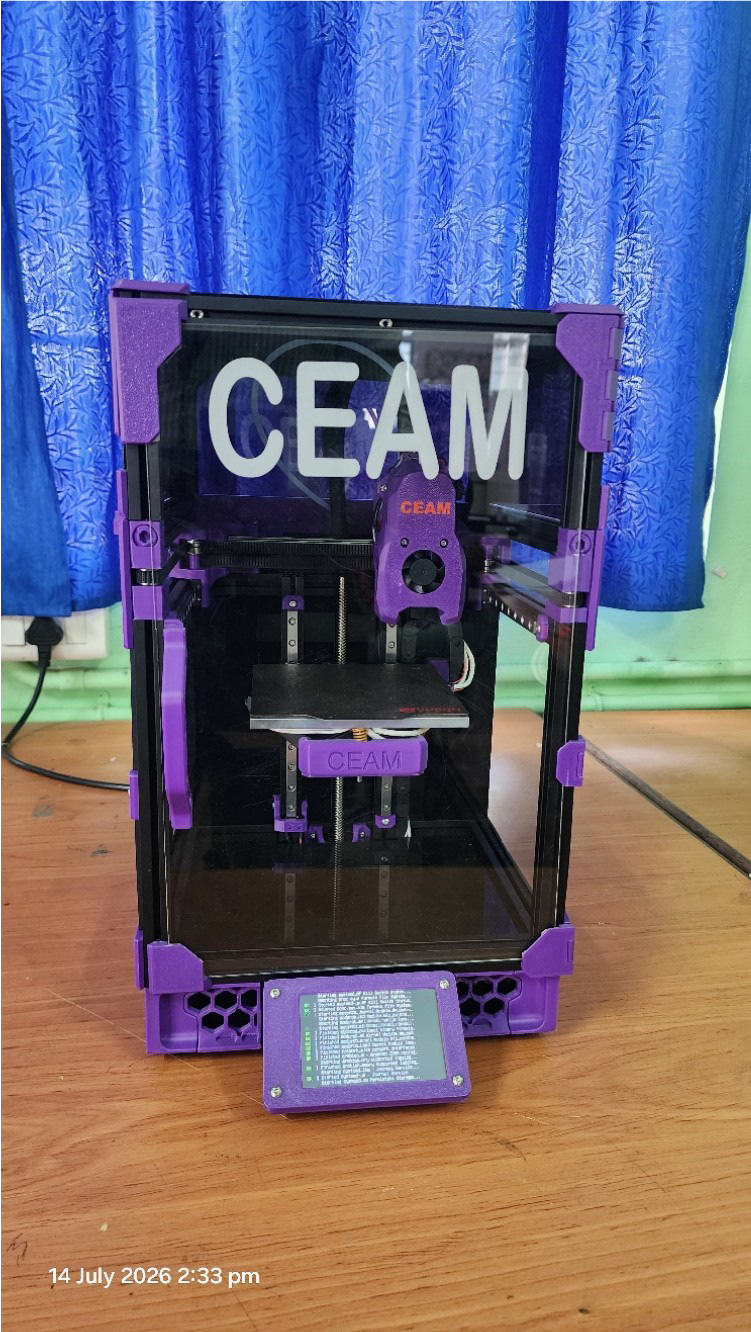
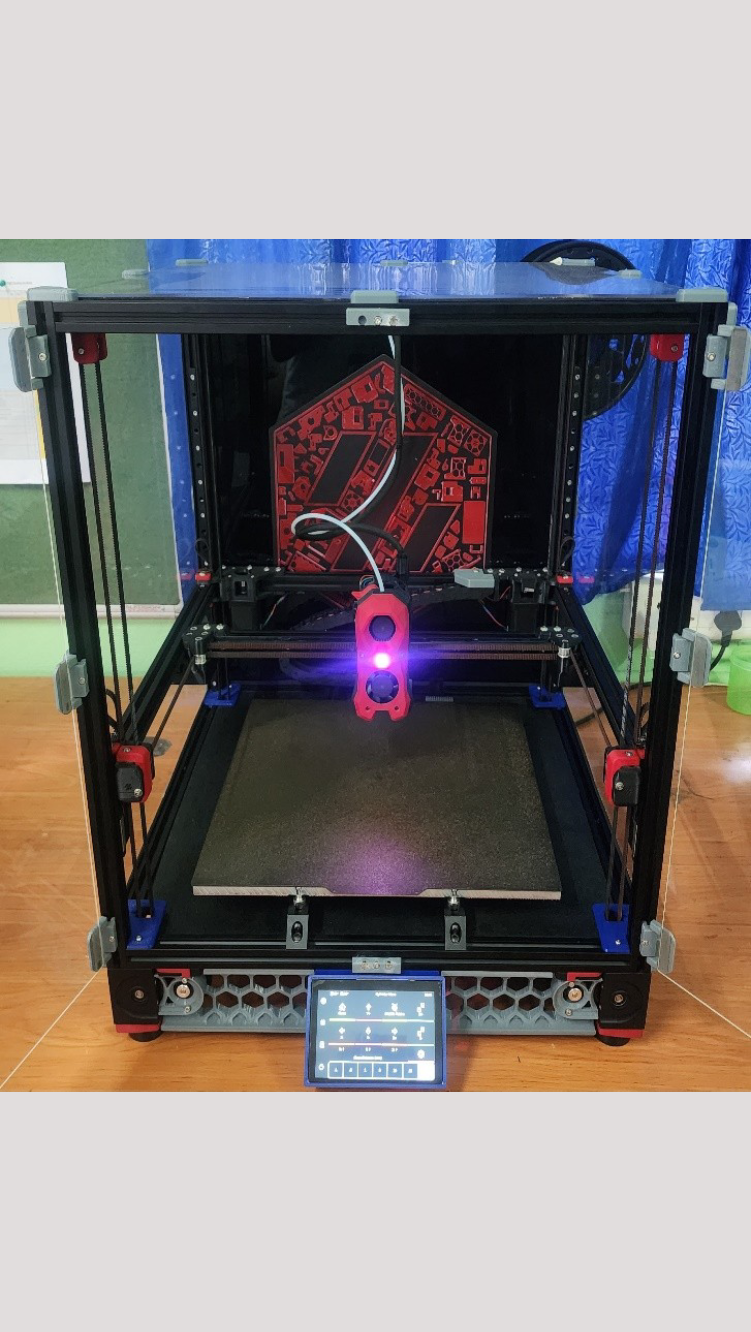
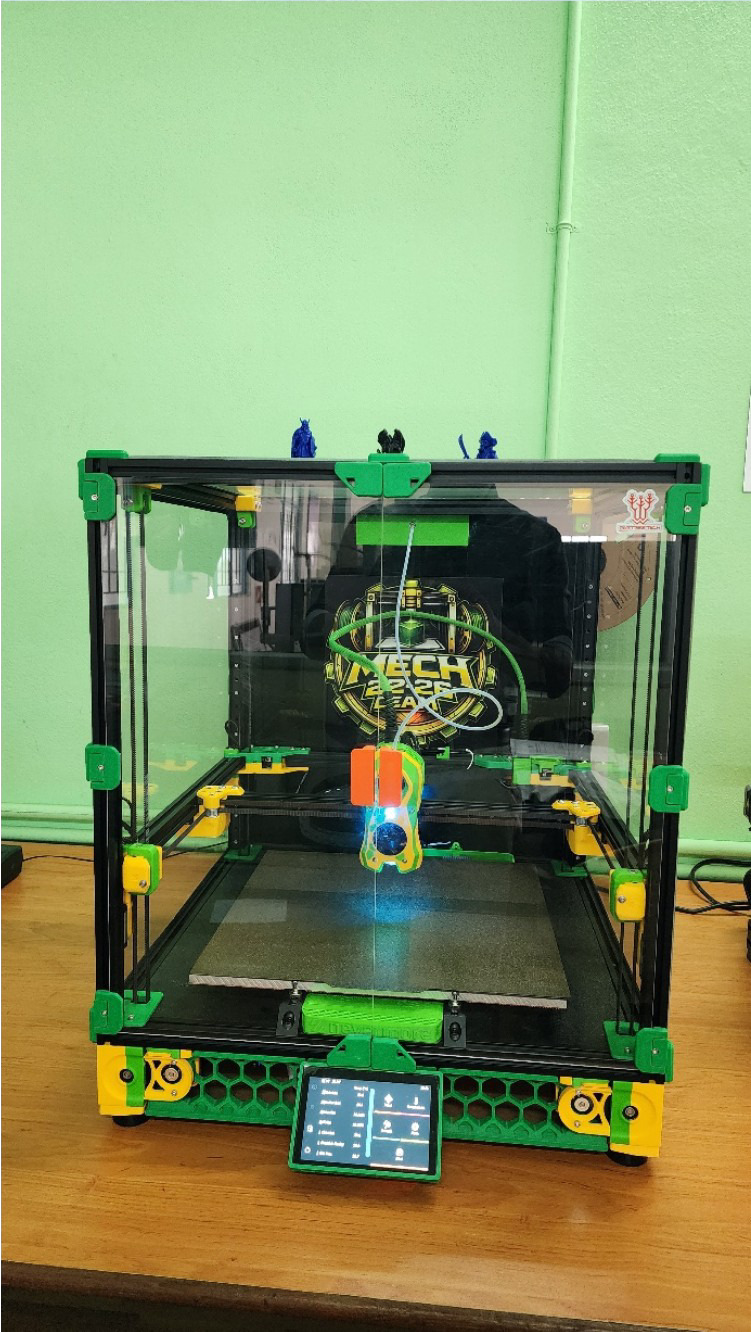
- The Centre for Excellence in Additive Manufacturing (CEAM) at Jai Shriram Engineering College (Autonomous), Tirupur, was established with the vision of providing a dedicated platform for students and faculty to learn, experiment, innovate, and develop practical solutions in the rapidly evolving field of Additive Manufacturing (AM). With the valuable support of Virtual Frontier Robotics, Coimbatore, CEAM has strengthened its infrastructure and capabilities, enabling the centre to undertake a wide range of academic, innovation, prototyping, research, consultancy, and industry-oriented activities.
- Since its inception, CEAM has grown from a modest facility equipped with a single 3D printer into a vibrant centre supporting additive manufacturing education, prototyping, student projects, innovation, research and skill development. The growth of CEAM reflects the Mechanical department’s commitment to providing industry-relevant, hands-on learning opportunities and nurturing an innovation-driven culture among engineering students.
- Initially, CEAM began its activities with one 3D printer, providing students with an opportunity to understand the complete workflow of additive manufacturing—from digital design and slicing to printing and post-processing. The centre was envisioned not merely as a laboratory for operating 3D printers, but as a hands-on innovation space where students could convert ideas into functional prototypes. Through regular academic activities, workshops, demonstrations and project-based learning, CEAM gradually developed into an important facility for experiential learning in the Mechanical Engineering Department.
- The growth of CEAM has been driven by the increasing interest of students in emerging manufacturing technologies and the continuous support of the institution and industry partners.
- From its initial single-printer setup, CEAM has expanded its infrastructure to four 3D printers, including facilities supporting different additive manufacturing approaches. The centre now provides students with opportunities to explore FDM and SLA-based 3D printing, along with associated design, slicing, printing and post-processing activities.
- CEAM has also expanded its activities beyond academic and student-oriented projects by undertaking industry consultancy work in the field of casting and pattern development. The centre provides support to casting industries in the design and development of patterns and pattern prototypes using additive manufacturing technologies.
- As part of its future growth and innovation roadmap, CEAM aims to develop and file patents for innovative machines, equipment and products developed through the centre. The initiative will encourage students and faculty to transform their ideas and prototypes into intellectual property (IP) with potential industrial and societal applications.
Centre of Excellence in Engineering Design (CEED)
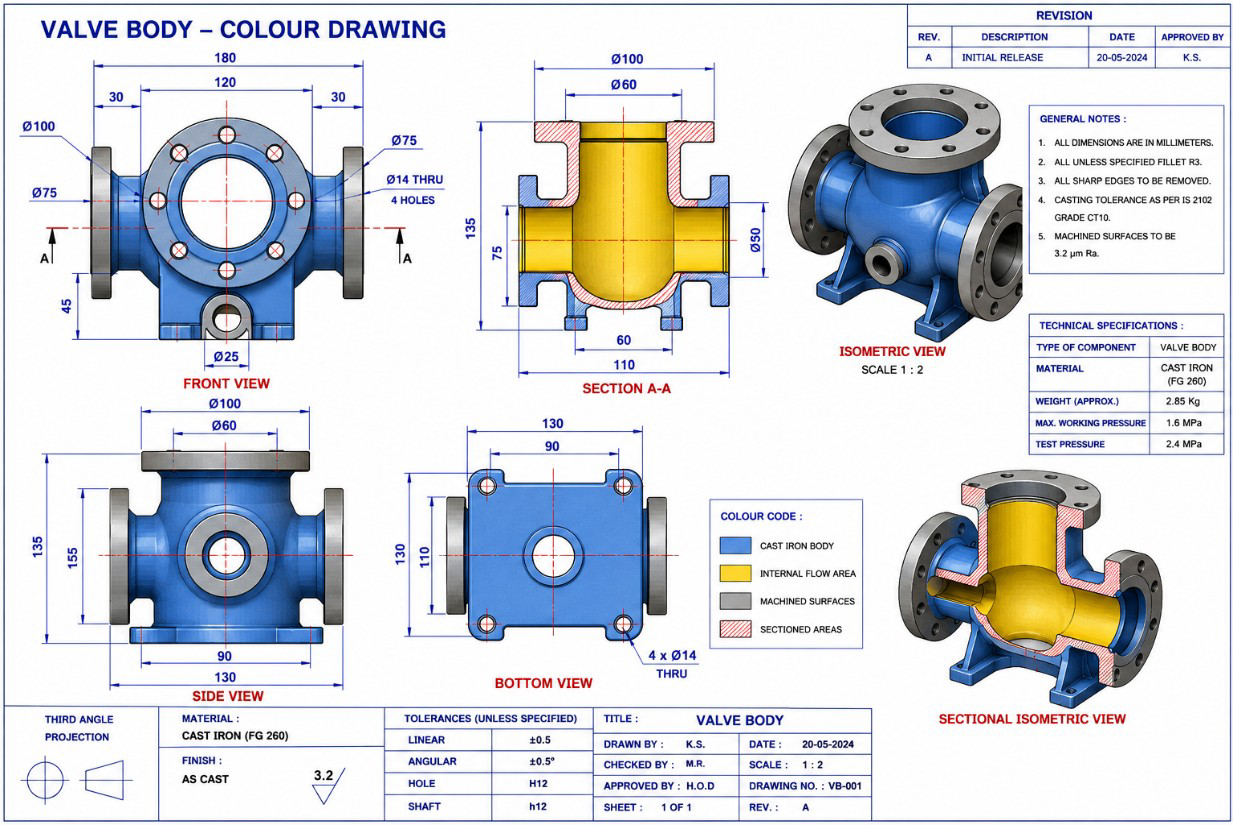
Modelling and Simulation
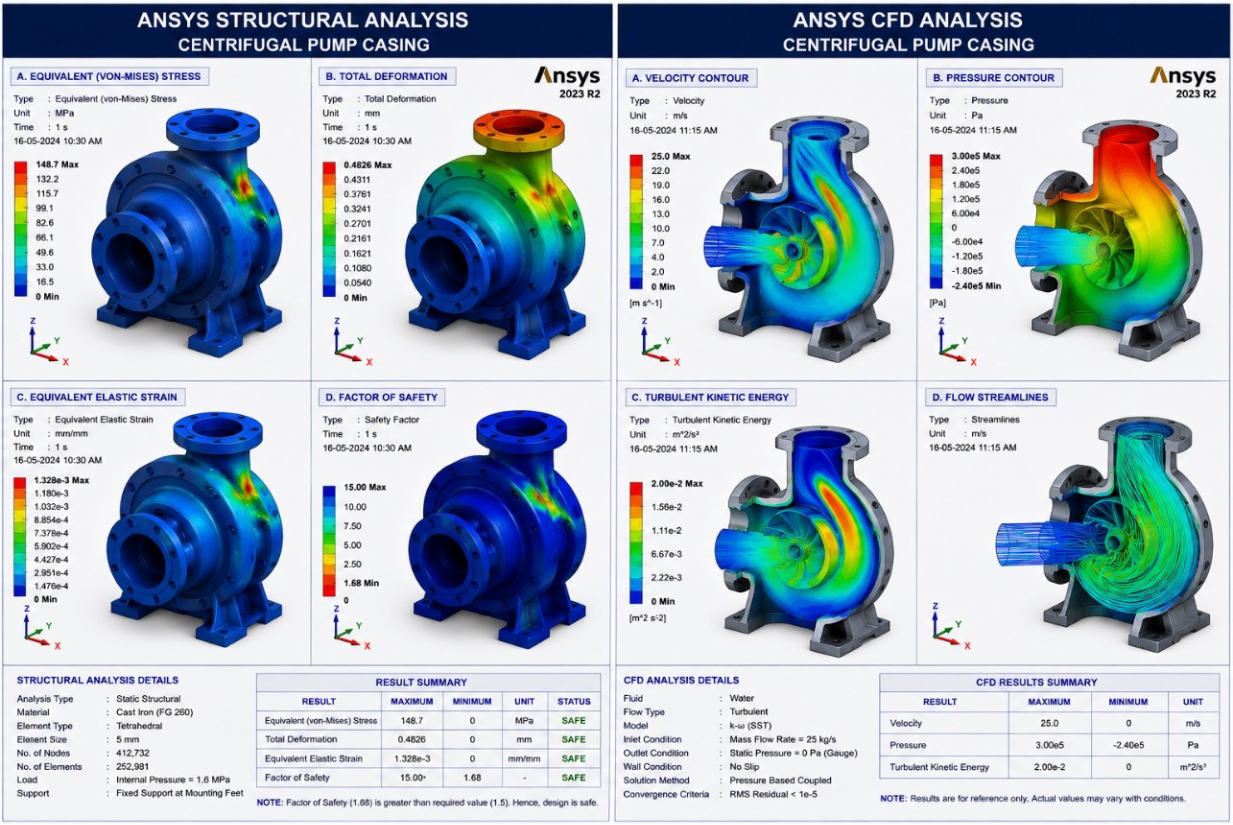
Engineering Analysis
The Centre of Excellence in Engineering Design (CEED) is an advanced technical facility established to develop expertise in CAD modelling, engineering simulation, product development and design analysis. The centre provides students and faculty with hands-on exposure to modern engineering tools and enables them to transform engineering concepts into optimized virtual prototypes. CEED is sponsored and supported by C Cube Technologies Erode.
- 2D & 3D drafting and detailing
- Assembly modelling
- Reverse engineering
- Kinematic and dynamic simulation
- Design optimization
- Structural analysis
- Modal and harmonic analysis
- Thermal analysis
- Computational Fluid Dynamics (CFD)
1. Modelling and Simulation
The Modelling and Simulation facility focuses on creating accurate 2D and 3D models of
mechanical components, assemblies, machines and systems using modern CAD software. Students
can develop parametric models, perform assembly modelling, generate manufacturing drawings,
and simulate the kinematic and dynamic behavior of mechanisms before physical fabrication.
Major activities
2. Engineering Analysis
The Analysis facility enables students and researchers to evaluate the structural, thermal,
fluid-
flow and dynamic performance of engineering components using CAE/FEA tools.
Major activities