Electrical and Electronics Engineering
About the Department
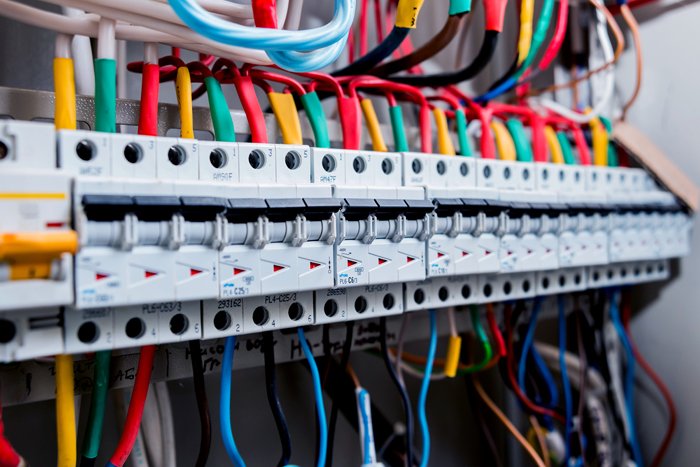
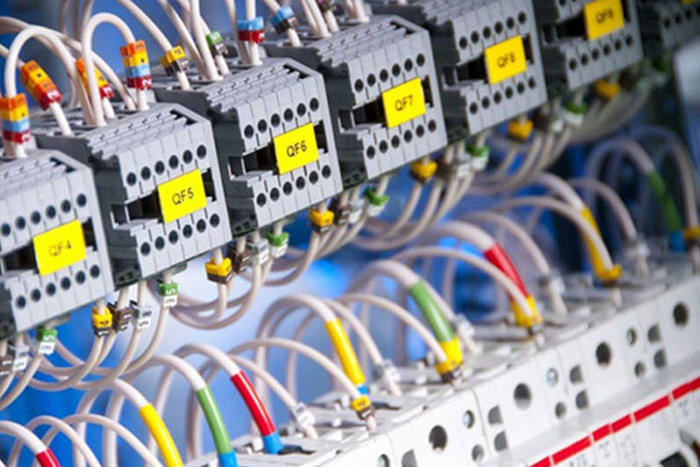
The Department of Electrical and Electronics Engineering was established in the year 2009. It offers an Under Graduate B.E programme with an intake of 60 students. The department has highly qualified and experienced teaching faculty, following “Outcome Based Education” model to ensure best possible final outcome.
The Department is Well-equipped with advanced laboratories that provide an opportunity for the student and the faculty members to carry out their project modules and research related works in the field of in Electrical Drives, Renewable Energy Sources, special Electrical Machines and Power system thus finding solution for industrial problems. Number of events such as conferences, workshop, symposium, project contest and faculty development programmes are organized for the benefit of students as well as the faculty members.
Periodical industrial visits and value added courses are conducted to enrich the knowledge of students and to their meet industrial expectations. The department has signed many MoU’s with industries and various institutions and takes pride in placing students in various core and multinational companies.
Vision
- To impart skills in Electrical Engineering and to prepare the students ethically strong enough to meet the technical challenges for the well being of nation.
Mission
- Equipping the students to meet the industrial requirements and mould them into successful professional.
- Performing research and development in emerging fields of Electrical Engineering.
- Enriching the knowledge and skills of the students towards the employment and benefit of society.
Programme Details
After 2 to 4 years of graduation, the graduates will
- Professional Competence: Utilize the knowledge of Engineering, Creative and Analytical skills in Electrical and Electronics fields towards successful employment.
- Adaptability and Continuous Learning: Work in multidisciplinary environment through lifelong learning skills that contributes to Personal and Organizational growth.
- Innovation and Social Responsibility: Develop a system and process to meet the needs of society and industry requirements.
Engineering graduates will be able to:
- PO1 : Engineering Knowledge: Apply knowledge of mathematics, natural science, computing, engineering fundamentals and an engineering specialization as specified in WK1 to WK4 respectively to develop to the solution of complex engineering problems.
- PO2 : Problem Analysis: Identify, formulate, review research literature and analyze complex engineering problems reaching substantiated conclusions with consideration for sustainable development. (WK1 to WK4)
- PO3 : Design / Development of Solutions: Design creative solutions for complex engineering problems and design/develop systems/components/processes to meet identified needs with consideration for the public health and safety, whole-life cost, net zero carbon, culture, society and environment as required. (WK5)
- PO4 : Conduct Investigations of Complex Problems: Conduct investigations of complex engineering problems using research-based knowledge including design of experiments, modelling, analysis & interpretation of data to provide valid conclusions. (WK8).
- PO5 : Engineering Tool Usage: Create, select and apply appropriate techniques, resources and modern engineering & IT tools, including prediction and modelling recognizing their limitations to solve complex engineering problems. (WK2 and WK6)
- PO6 : The Engineer and The World: Analyze and evaluate societal and environmental aspects while solving complex engineering problems for its impact on sustainability with reference to economy, health, safety, legal framework, culture and environment. (WK1, WK5, and WK7).
- PO7 : Ethics: Apply ethical principles and commit to professional ethics, human values, diversity and inclusion; adhere to national & international laws. (WK9)
- PO8 : Individual and Collaborative Team Work: Function effectively as an individual, and as a member or leader in diverse/multi-disciplinary teams.
- PO9 : Communication: Communicate effectively and inclusively within the engineering community and society at large, such as being able to comprehend and write effective reports and design documentation, make effective presentations considering cultural, language, and learning differences
- PO10 : Project Management and Finance: Apply knowledge and understanding of engineering management principles and economic decision-making and apply these to one’s own work, as a member and leader in a team, and to manage projects and in multidisciplinary environments.
- PO11 : Life-long Learning: Recognize the need for, and have the preparation and ability for i) independent and life-long learning ii) adaptability to new and emerging technologies and iii) critical thinking in the broadest context of technological change. (WK8)
The Graduates will be able to:
- PSO1: Problem Driven Engineering Innovation: Provide innovative and feasible solutions for electrical and electronics engineering problems.
- PSO2: Hands on Competency: Develop practical skills in electrical and automation applications to improve the living standards of society.
- B.E.Electrical and Electronics Engineering
UG
Dr.P.S.Periasamy
Professor & Principal
Dr.N.Lakshmipriya
Associate Professor & Head
Dr.P.Soundar Rajan
Associate Professor
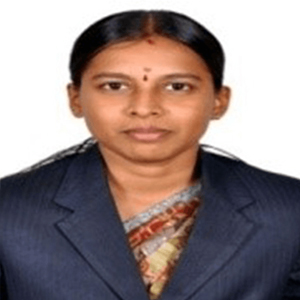
Ms.P.Hema
Assistant Professor

Mr.E.Babu
Assistant Professor
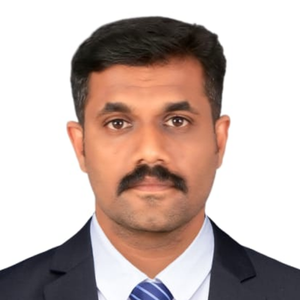
Dr.S.Karthikkumar
Assistant Professor
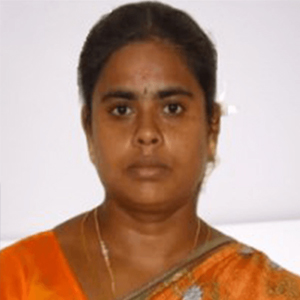
Ms.V.Kavithamani
Assistant Professor
Ms.K.Dhivya
Assistant Professor

Mr.E.Prasannakumar
Assistant Professor
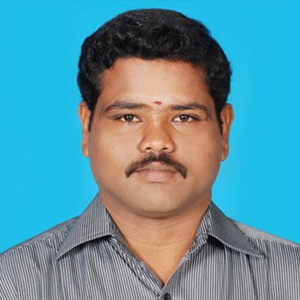
Mr.D.Arul
Assistant Professor
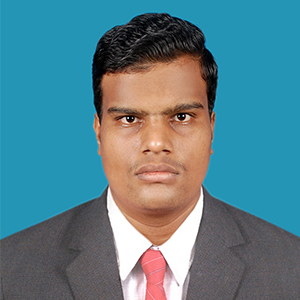
Mr.T.Balaji
Assistant Professor
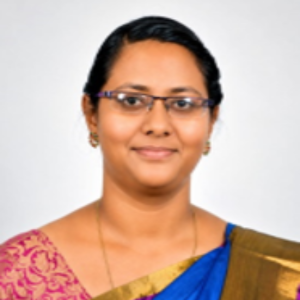
Ms.D.Muhamadha Begam
Assistant Professor

Ms.L.Kiruthika
Assistant Professor
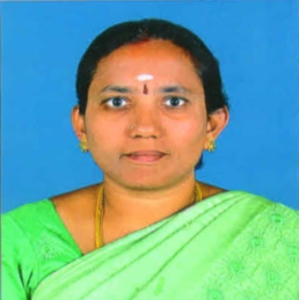
Ms.M.Veereswari
Assistant Professor
| EEE: 2025-26 | ||||||
| S. No. | Name of the Faculty | Qualification | Designation | Joining Date | Nature of Association Regular/ Contract |
Google Scholar Id |
|---|---|---|---|---|---|---|
| 1 | Dr.P.S.Periasamy | Ph.D. | Professor | 13/06/2025 | Regular | Google Scholar |
| 2 | Dr.N.Lakshmipriya | Ph.D. | Assistant Professor |
19/05/2011 | Regular | Google Scholar |
| 3 | Dr.P.Soundar Rajan | Ph.D. | Associate Professor |
02/07/2025 | Regular | Google Scholar |
| 4 | Dr.S.Ayyappan | Ph.D. | Assistant Professor |
18/06/2012 | Regular | Google Scholar |
| 5 | Ms.P.Hema | M.E. | Assistant Professor |
03/06/2013 | Regular | Google Scholar |
| 6 | Mr.E.Babu | M.E. | Assistant Professor |
03/06/2013 | Regular | Google Scholar |
| 7 | Mr.E.Prasannakumar | M.E. | Assistant Professor |
03/06/2013 | Regular | Google Scholar |
| 8 | Ms.K.Dhivya | M.E. | Assistant Professor |
20/06/2015 | Regular | Google Scholar |
| 9 | Mr.S.Leelakrishnan | M.E. | Assistant Professor |
20/06/2016 | Regular | Google Scholar |
| 10 | Ms.V.Kavithamani | M.E. | Assistant Professor |
03/05/2019 | Regular | Google Scholar |
| 11 | Mr.S.Karthikkumar | M.E. | Assistant Professor |
02/01/2020 | Regular | Google Scholar |
| 12 | Ms.B.Kalaiselvi | M.E. | Assistant Professor |
26/07/2022 | Regular | Google Scholar |
| 13 | Mr.D.Arul | M.E. | Assistant Professor |
02/08/2024 | Regular | Google Scholar |
| 14 | Mr.S.Ragupathi | M.E. | Assistant Professor |
13/06/2025 | Regular | Google Scholar |
| 15 | Mr.T.Balaji | M.E. | Assistant Professor |
19/01/2026 | Regular | Google Scholar |
Internship
INDUSTRY SUPPORTED LABORATORIES
MoU
| S.No. | Name of the Organization | MoU Signed On | Validity | Purpose of MoU |
|---|---|---|---|---|
| 1 | Ausweg Info Controls Pvt Ltd, Coimbatore | 31.07.2025 | 5 Years | Provide practical exposure in industrial automation, control systems and electrical instrumentation through internships, training and industry-oriented projects. |
| 2 | DWB Semiconductor, Coimbatore | 30.10.2025 | 5 Years | Provides industry–academia collaboration through internships, training and placement. |
| 3 | Ozotec Automobile Private Limited, Coimbatore | 14.03.2025 | 5 Years | Facilitate industry–academia collaboration in electric vehicle technology, electric mobility, battery systems and automobile engineering through internships, industrial training, technical workshops and live projects for students. |
| 4 | KrishTech, Coimbatore | 10.03.2025 | 5 Years | Enhance student competency in embedded systems, IoT, microcontrollers and electronic system development through technical training, workshops and project support. |
| 5 | Genn Automation, Coimbatore | 07.02.2025 | 5 Years | Develop practical skills in industrial automation, PLC, SCADA, control systems and automation technologies through internships, training and live projects. |
| 6 | Deccan Pump Private Limited, Coimbatore | 14.12.2023 | 3 Years | Provide industrial exposure in electrical systems, motor-driven pump applications, maintenance and energy-efficient technologies through internships, in-plant training, faculty training and workshops. |
| 7 | Windplus Private Limited, Coimbatore | 27.06.2023 | 5 Years | Promote practical knowledge in wind energy systems, renewable energy technologies and power generation through industrial visits, in-plant training and technical interaction. |
| 8 | Techtzo Solution Private Limited, Coimbatore | 23.08.2022 | Lifetime | Strengthen student skills in embedded systems, IoT, automation and electronic product development through technical training and workshops. |
| 9 | Caliber Interconnect Solutions India Private Limited, Coimbatore | 18.05.2022 | 5 Years | Provides industry–academia collaboration through internships, training and placement. |







INDUSTRY VISIT
Laboratory Facilities
- Electrical Machines Laboratory
- Power Electronics and Drives Laboratory
- Control and Instrumentation Laboratory
- Power System Simulation Laboratory
- Engineering Practices Laboratory
Consultancy
The faculties and students from the Department of EEE in JSREC are actively involved in various consultancy works in and around Tamil Nadu. Engaging students for consultancy work under the guidance of the faculty experts helps them to gain practical field knowledge and excel in operating the equipments which helps them to work efficiently with no errors after the completion of their course.
Value Added Courses
The value adding courses are conducted, to enrich the knowledge of Electrical Engineering students and meet their industrial expectations.
- Fundamental of Industrial Automation
- Embedded System Programming
- LabView
- PLC
- PCB Design
- MAT Lab
- SCADA
- Ecad
- Electrical Machines Winding Design
- eSim
- Hands on Training For Circuit Designing
- TinkerCAD
Library
Electrical and Electronics Engineering Department Library has plenty of resources with more than 200 books, UG Students project reports, Newsletters and Questions booklets etc., A various collections on subjects starting from Basic Electrical and Electronics Engineering to higher end Power system analysis, Control and instrumentation, Electrical Machines, special machines, Power Electronics and drives control, Embedded microcontroller system books. The library also has various technical resources such as conference proceedings, Questions and answer booklets.
Apart from the above, the library is also equipped with Audio Visual resources on CDs, DVDs etc. A complete collection of audio and video content including 4 TB of NPTEL content is made available in every computer so that the students can use it for additional learning. A fully fledged reprography facility is also available for photocopying and binding the content obtained for further usage.
- The library functions on all working hours to a maximum of 42 hours per week.
- Total number of books : 287
- Total number of volumes : 115
- Total number of foreign author books : 18
- Total number of UG and PG reports : 124
- Total number of Indian author books : 270
- Total number of proceedings : 12
- Total number of CDs and DVDs : 10
- Total number of questions booklets : 12
- Total number of NPTEL videos : 4 TB
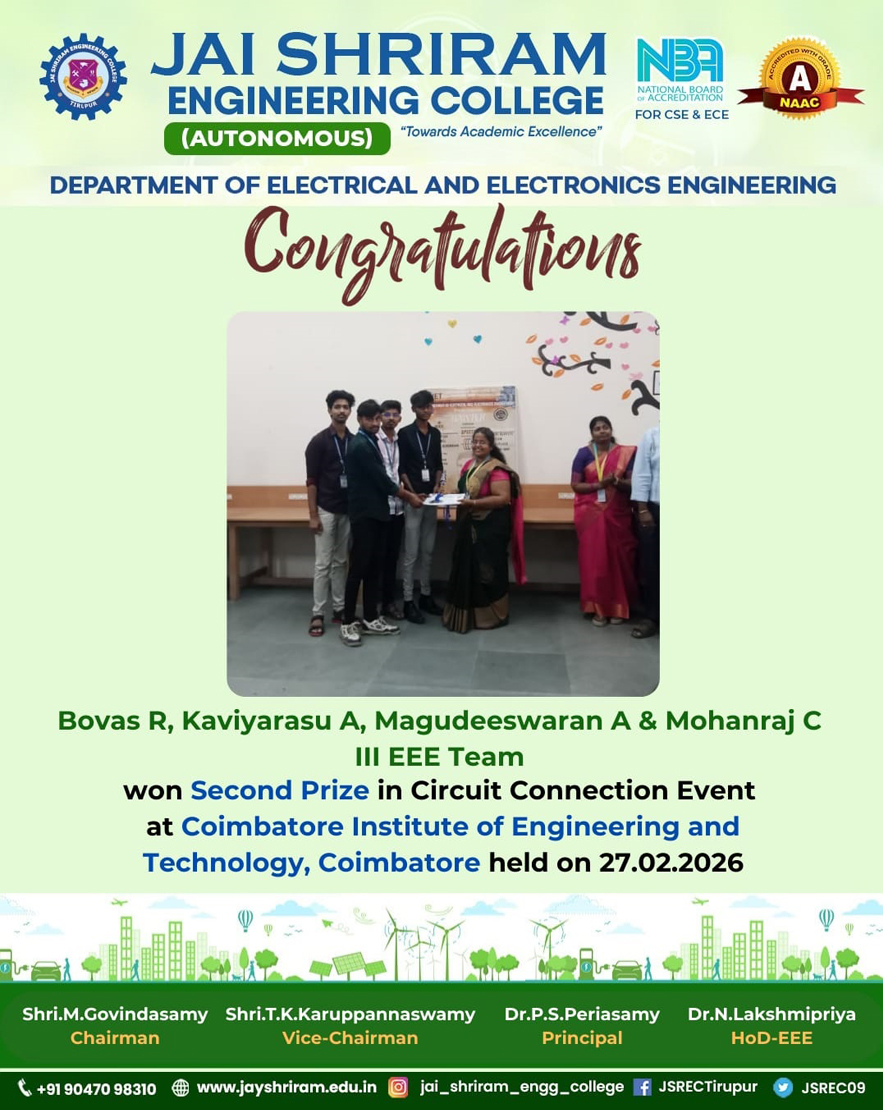
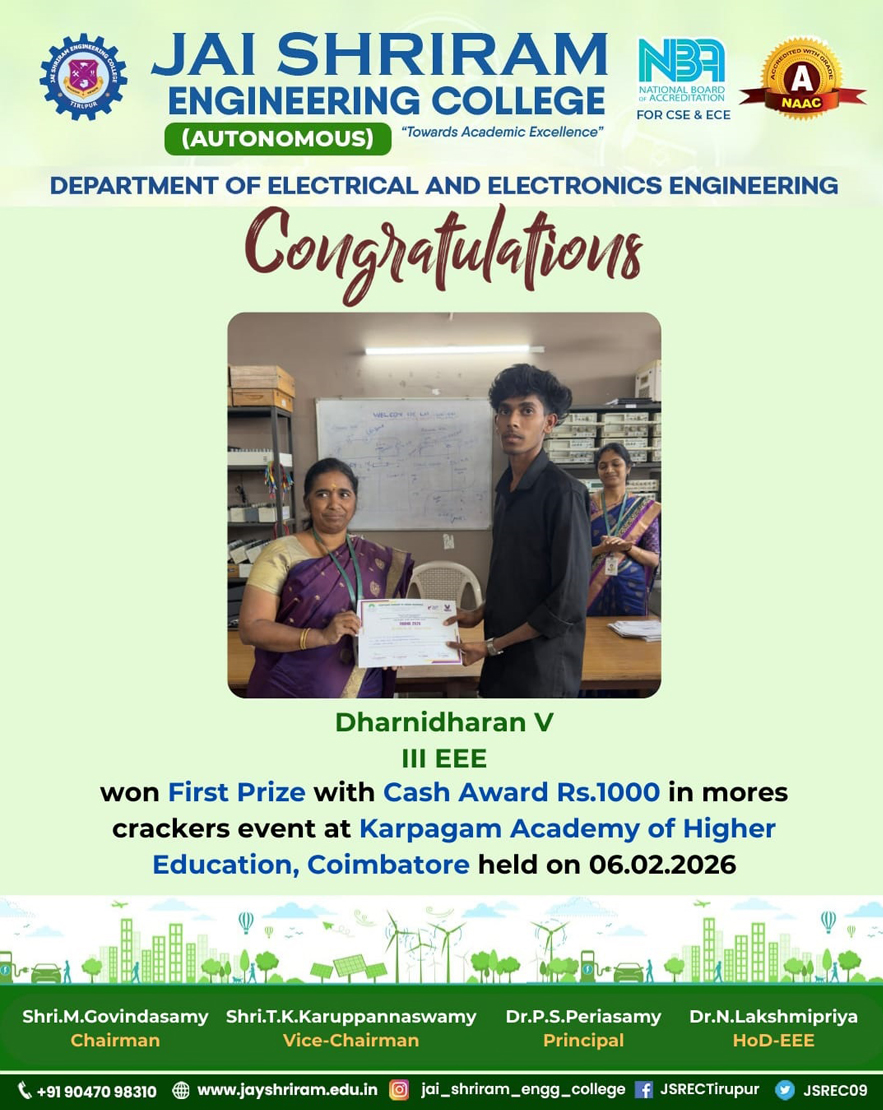
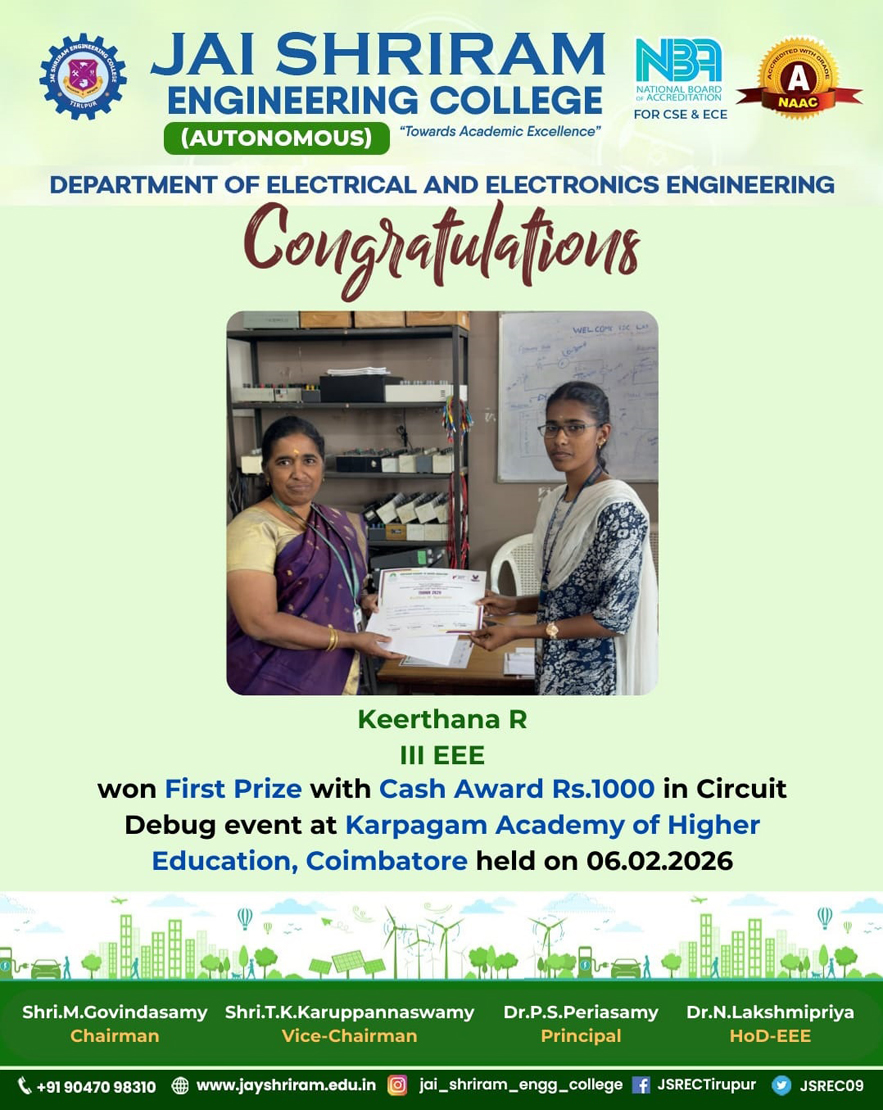
Achievements